

 February 8, 2026
  6 Min
6 Min  No Comment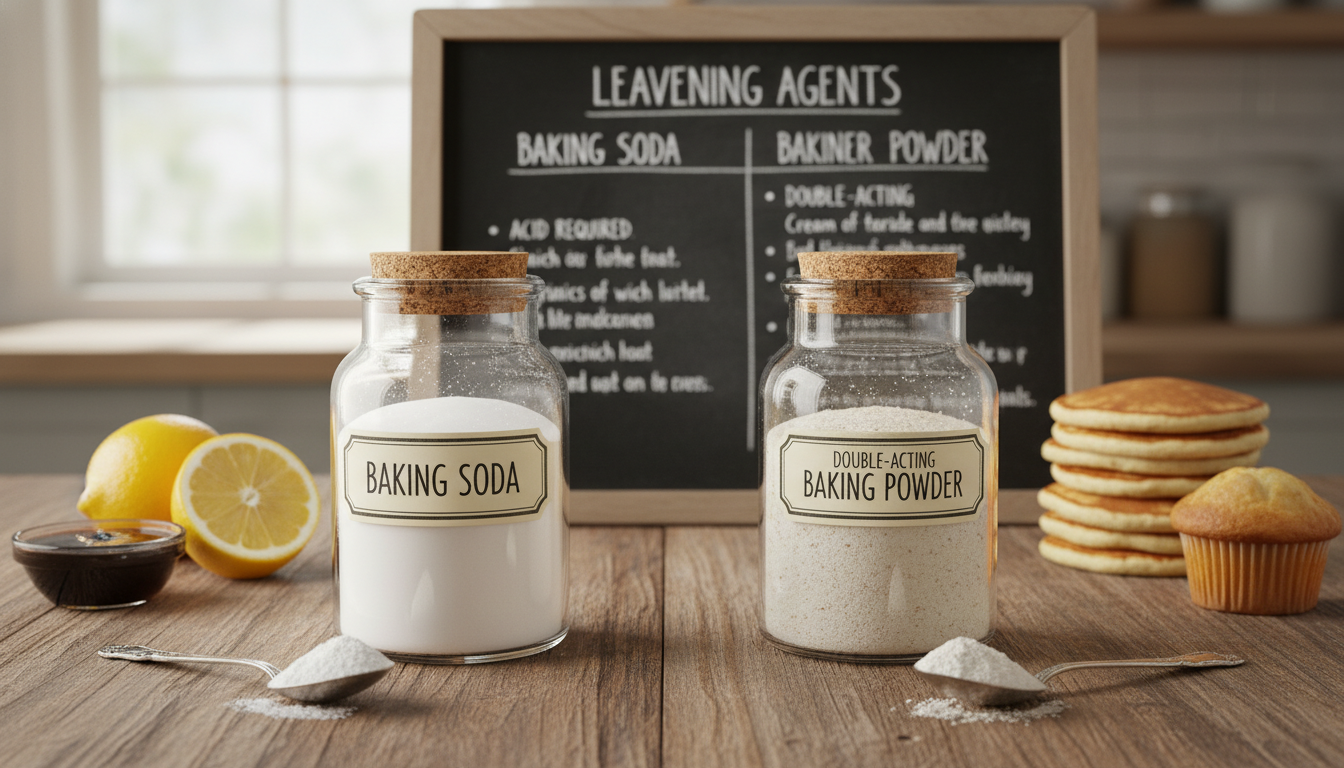
Baking soda vs baking powder might sound like a trivial kitchen debate, but it’s surprisingly layered—kind of like your favorite double-chocolate muffin that didn’t rise quite right. You’ve probably stared at both little tins in your pantry and wondered, “Are they basically the same, or am I messing up every recipe I attempt?” While their names and appearances overlap, understanding the nuances between them can elevate your baking game (or save that cake from becoming a dense disaster).
Let’s dig into key differences and best uses—without getting overly scientific or needing a PhD in chemistry. This feels more like a friendly chat with a seasoned baker who occasionally mismeasures, but still knows her stuff.
Understanding the Chemical Backbone
What Exactly Is Baking Soda?
Baking soda is pure sodium bicarbonate (NaHCO₃)—a base that readily reacts with an acid when moisture is present. That reaction generates carbon dioxide, the magic bubble-maker that gives your baked goods lift, fluff, and structure. It’s activated instantly, so mixing that wet, acidic batter and then letting it sit too long? You’ve just deflated your bake.
What Makes Baking Powder Different?
Baking powder is essentially a ready-to-go leavening system: sodium bicarbonate paired with a dry acid and a buffer like cornstarch. Most are double-acting—producing gas once when mixed with liquid, and again under heat. This staged release gives you more flexibility and steadier rising.
Quick Comparison
| Feature | Baking Soda | Baking Powder |
|———|————-|—————|
| Composition | Sodium bicarbonate | Sodium bicarbonate + acid + buffer |
| Activation | Needs acid + moisture | Needs moisture + heat (double-acting) |
| Strength | Stronger, more concentrated | Milder per teaspoon |
This table’s a simplified snapshot but helps highlight why they behave so differently in recipes.
When to Use Which—and Why It Matters
Baking Soda: The Fast-Acting Workhorse
Use baking soda when your recipe already includes a natural acid—think buttermilk, yogurt, lemon juice, molasses, or cocoa (non-Dutch-processed). Its swift reaction adds quick lift and encourages browning through alkalinity, which is why chocolate chip cookies get that alluring golden-brown edge.
“Baking soda reacts with acidic ingredients and boosts browning, giving baked goods their appealing golden hue.”
Too much, though, and you risk an unpleasant metallic or soapy taste. That balance is why accurate measuring is critical.
Baking Powder: The All-in-One Rise Solution
When your recipe lacks an acidic component—think neutral sponge cakes, biscuits, or shortcakes—baking powder is your safety net. It contains both the acid and base necessary to rise, so you’re covered as long as moisture and heat are present. Double-acting powder gives you a second boost when the oven heat hits, which is especially handy in taller or denser bakes.
Sometimes, You’ll Need Both
In some batters—like buttermilk pancakes, muffins, or certain cakes—you’ll see both agents used. Baking soda neutralizes excess acidity and aids browning, while baking powder provides reliable lift. Together, they help achieve a well-balanced flavor and texture.
Real-World Kitchen Insights
- Commercial kitchens: Double-acting powder offers timing flexibility—helpful when prep and bake schedules vary.
- Cultural example: In Indian cooking, soda helps pakoras stay light and cut down oiliness; both agents sweeten and fluff dhokla.
Substitution Strategies: When You’re Low on One or the Other
Swapping Baking Powder for Baking Soda
You can, but… baking soda is about three to four times stronger per unit. So if a recipe needs 1 teaspoon of baking soda, use 3–4 teaspoons of baking powder. Be mindful—flavor and texture may shift, and you may need to adjust acidity levels.
Swapping Baking Soda for Baking Powder
Trickier—but doable. Use a quarter teaspoon of baking soda plus an acid (like ½ teaspoon cream of tartar, or 1 teaspoon lemon juice/vinegar) to replace 1 teaspoon of baking powder. Otherwise, without acid, the reaction won’t happen, and your bake flops.
Shelf Life and Storage Essentials
Both lose potency over time—especially baking powder. Use airtight containers, label with open dates, and swap every few months if you bake frequently. Test freshness: add baking soda to vinegar, or baking powder to hot water—fizzing means you’re still good.
Expert Voices
“Recipes with baking soda often go straight from mixing bowl to oven—it’s activated as soon as it gets wet, so there’s little room for delay.”
That reflects how time-sensitive baking soda is—whereas baking powder gives more leeway, courtesy of its staged activation.
Conclusion
Navigating “baking soda vs baking powder” is less about flashy chemistry and more about knowing when one needs the other’s support—or when it can do the job solo. Baking soda, with its potent, acid-dependent lift and browning boost, brings flavor and texture—but demands precision. Baking powder, in contrast, offers standalone rising power and forgiving timing. Understand the balance, and you save fluffy cakes, tender muffins, and golden biscuits—even when recipe conditions or pantry stock leave you improvising.
Next steps? Try splitting your use—for pancakes, muffins, and cakes—and observe how depth of color, flavor, and rise shift. Baking’s chemistry is part logic, part instinct—and always, delicious.
FAQs
What’s the main difference between baking soda and baking powder?
Baking soda is pure sodium bicarbonate and requires an acid plus moisture to activate. Baking powder contains both base and acid (plus a buffer), so it only needs moisture (and heat, if double-acting) to produce lift.
Can I use baking powder instead of baking soda?
Yes—but you’ll need about 3 times more baking powder to match baking soda’s strength. Expect subtle changes in flavor and rise due to the extra ingredients in baking powder.
How do I substitute baking soda if I only have baking powder?
Use about ¼ teaspoon of baking soda plus an acid (like cream of tartar, lemon juice, or vinegar) to replace 1 teaspoon of baking powder. Without the acid, baking soda won’t activate properly.
Why do some recipes call for both baking soda and baking powder?
Combining both helps balance acidity, texture, and color: baking soda neutralizes acid and boosts browning, while baking powder ensures consistent rising—even if the acidity levels vary.
How can I test if my baking soda or powder is still good?
For baking soda, add a teaspoon to vinegar—strong fizz means it’s active. For baking powder, stir into hot water—bubbling indicates it’s still potent.
