

 February 8, 2026
  6 Min
6 Min  No Comment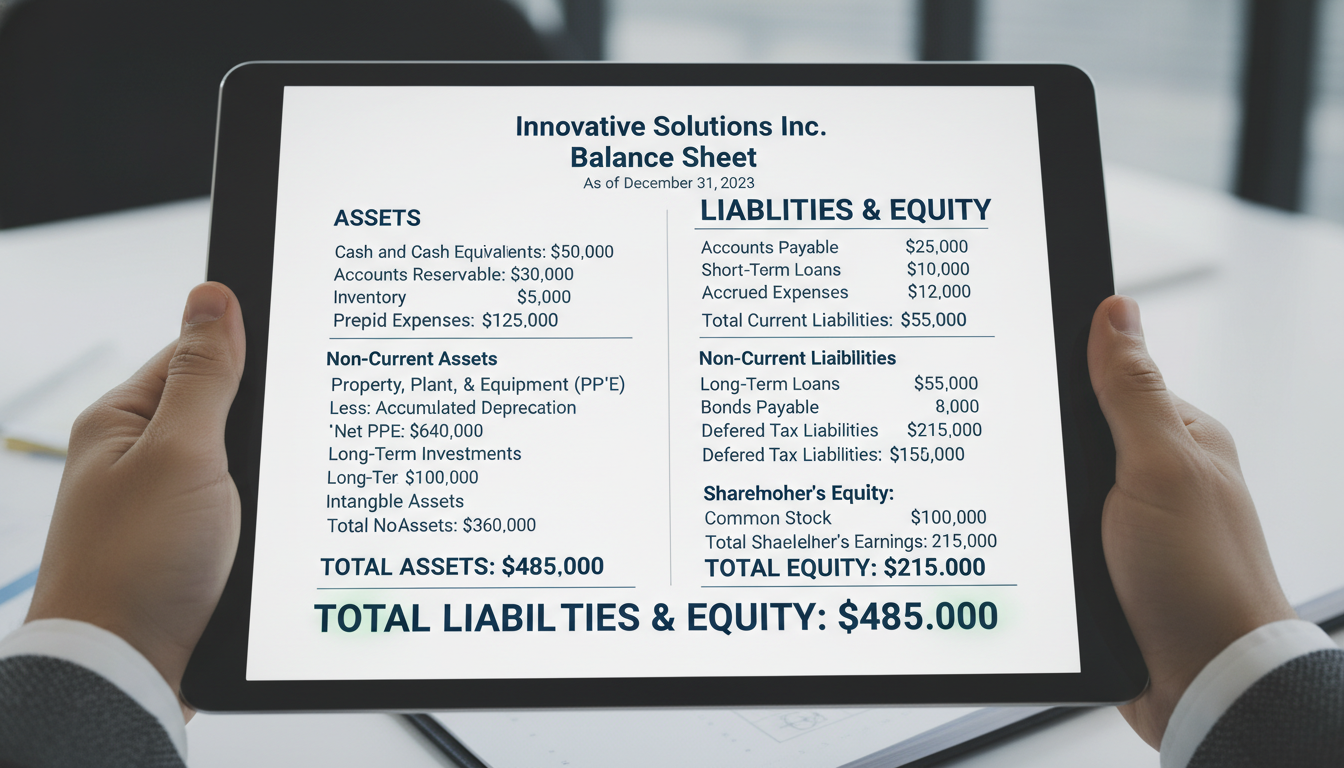
Creating a balance sheet format may sound a bit dry at first, but once you dig into its purpose—organizing assets, liabilities, and equity in a coherent layout—it suddenly becomes kinda fascinating, especially if you’re preparing financial statements. In practical terms, it’s the snapshot of a business’s financial position at a specific moment. And yeah, it’s not rocket science, but there’s often confusion about what goes where, particularly for small businesses or folks working on their bookkeeping. We’re gonna walk through a clean, simple template and show how to make it work for different setups—even if you think spreadsheets are your enemy.
Understanding the Balance Sheet Format Basics
What Makes Up a Balance Sheet
A balance sheet is divided into three big chunks:
– Assets (what the company owns or expects to receive)
– Liabilities (what the company owes)
– Equity (owner’s share in the business after liabilities)
That breakdown itself isn’t enough until it’s structured correctly. So, here’s what a typical template includes:
– Current assets (cash, receivables, inventory)
– Long-term assets (property, equipment, intangible assets)
– Current liabilities (accounts payable, short-term loans)
– Long-term liabilities (mortgages, bonds)
– Owner’s equity (capital stock, retained earnings)
This bit of structure ensures the equation — Assets = Liabilities + Equity — always balances. It may sound obvious, but you’d be surprised how often misplacement of even one small entry throws the columns out of sync.
Why a Simple Template Helps
A template isn’t just for ease; it aids clarity. Whether you’re a startup hustling to track initial investment or a seasoned manager reviewing quarterly reports, a simple format helps spot unusual trends quickly. For example, if inventory suddenly spikes, you can immediately ask, “Hey, did sales drop or did someone misclassify something?” Having a well-labeled layout avoids guesswork.
Building Blocks: Components of a Simple Template
Current Assets Section
- Cash and equivalents (clear, countable)
- Accounts receivable (money owed by customers)
- Inventory or supplies (only if easily valued)
Each item should include a small note to clarify inclusions—like, is petty cash lumped in with the main bank balance? This level of detail saves your future self from squinting at numbers two quarters later.
Fixed Assets and Long-Term Investments
Here you’d list:
– Equipment, machinery, vehicles (less depreciation)
– Property (buildings, land)
– Intangible assets (patents, trademarks, goodwill)
Showing depreciation or amortization (where applicable) gives a more accurate value, not just historical cost.
Liabilities: Current vs Long-Term
- Current liabilities: Short-term obligations, such as accounts payable and short-term loans—usually due within a year.
- Long-term liabilities: Debts stretching beyond a year—like mortgage loans or deferred tax liabilities.
Splitting them this way offers clarity on what needs cash soon versus what’s a longer stretch.
Equity Components
Typically includes:
– Paid-in capital (investment by owners or shareholders)
– Retained earnings (profit kept in the business after dividends)
If there’s accumulated deficit instead, label it clearly—“Accumulated Deficit” is better than burying it under “Retained Earnings” to gloss things over.
Why Every Number Placement Matters
Imagine you lump short-term debt under long-term liabilities—boom, suddenly your ratio calculations—like the current ratio or debt-to-equity ratio—get skewed. You might think liquidity is healthy when, in fact, something’s due next week. Precision matters not for its own sake, but for decision-making.
“Even small misclassifications can distort analysis and mislead investors,” notes a financial controller at a mid-sized tech firm.
Misplacement isn’t always malicious; it’s often just inattentiveness or inconsistent formatting. Standardizing headings, decimal places, note formats—simple habits like that make your balance sheet not just audit-ready, but future-you-friendly.
Real-World Example: Template Walkthrough
Say you run a small e-commerce operation. Here’s how you might lay out your balance sheet:
Assets
– Cash & Equivalents: $20,000
– Accounts Receivable: $5,000
– Inventory: $8,000
Total Current Assets: $33,000
- Equipment (net of depreciation): $12,000
- Website development (intangible, amortized): $3,000
Total Assets: $48,000
Liabilities
– Accounts Payable: $6,000
– Short-Term Credit Line: $4,000
Total Current Liabilities: $10,000
- Business Loan (long-term): $15,000
Total Liabilities: $25,000
Equity
– Owner’s Capital: $10,000
– Retained Earnings: $13,000
Total Equity: $23,000
And the equation checks out: $48,000 = $25,000 + $23,000. If those figures didn’t sum up, you’d go back to hunting that missing $1,012 from wherever you misclassified it.
Practical Tips to Customize Your Template
Use Software, or DIY?
Most small businesses lean on spreadsheets—which is fine. For multi-entity consolidation though, accounting software brings automation. Still, a spreadsheet version forces you to engage deeply with line items.
Include Notes Section
Even a simple “Notes” column helps explain oddities: inventory adjustments, pending invoices, or loan terms. That context becomes gold when you’re revisiting the sheet months later or explaining it to an auditor.
Regular Review Schedule
Don’t wait till year-end. Monthly or quarterly reviews help catch misclassifications early, spot trends, and keep things balanced. You’d be surprised how seeing terms like “prepaid insurance” each month reinforces what that term truly means.
Common Pitfalls and How to Avoid Them
- Mixing asset categories: Keep current vs long-term separate. So you don’t think cash will cover long-term equipment.
- Forgetting depreciation: Equipment value without depreciation overstates its worth.
- Using vague labels: “Other liabilities” is a black box; better to specify like “Accrued Expenses.”
- Not reconciling regularly: Bank mismatches creep in if you don’t reconcile every month.
- Skipping notes: A number without context feels suspicious—even if it’s accurate.
Conclusion
A simple balance sheet format may look straightforward—but its power lies in clarity, consistent structure, and deliberate classification. It’s a foundational tool, whether you’re managing a mom-and-pop shop or scaling an ambitious startup. Labeling items properly, distinguishing current vs long-term, and adding brief notes can drastically reduce confusion during audits, investor discussions, or strategic planning. Regularly reviewing and fine-tuning the format anchors both discipline and transparency in the financial process. In short: get the layout right, and the numbers will tell their true story.
FAQs
Q1: What’s the easiest way to start building a balance sheet?
Start with a basic spreadsheet organized into assets, liabilities, and equity. Use separate sections for current and long-term items, and label each entry clearly to stay organized.
Q2: How often should I update my balance sheet?
Ideally, update it monthly or quarterly. Regular updates help catch misclassifications early and improve your cash flow visibility over time.
Q3: Why should depreciation be listed on the balance sheet?
Depreciation shows an asset’s reduced book value over time. It prevents overstating worth and helps with accurate performance analysis or replacement planning.
Q4: Can I combine categories like ‘Other Liabilities’ to simplify things?
It might seem simpler, but vague labels can obscure understanding. Whenever practical, break them into specific categories like “Accrued Expenses” or “Deferred Revenue” to maintain clarity.
Q5: Should notes be included in the balance sheet?
Yes, even minimal notes explaining unusual entries or terms bring transparency. They’re especially useful during reviews, audits, or handing over to someone else.
Q6: What if assets don’t equal liabilities plus equity?
When that happens, it’s a signal an item was misplaced, omitted, or miscalculated. Double-check category assignments, reconcile accounts, and make sure every transaction is accurately recorded.
