

 February 9, 2026
  5 Min
5 Min  No Comment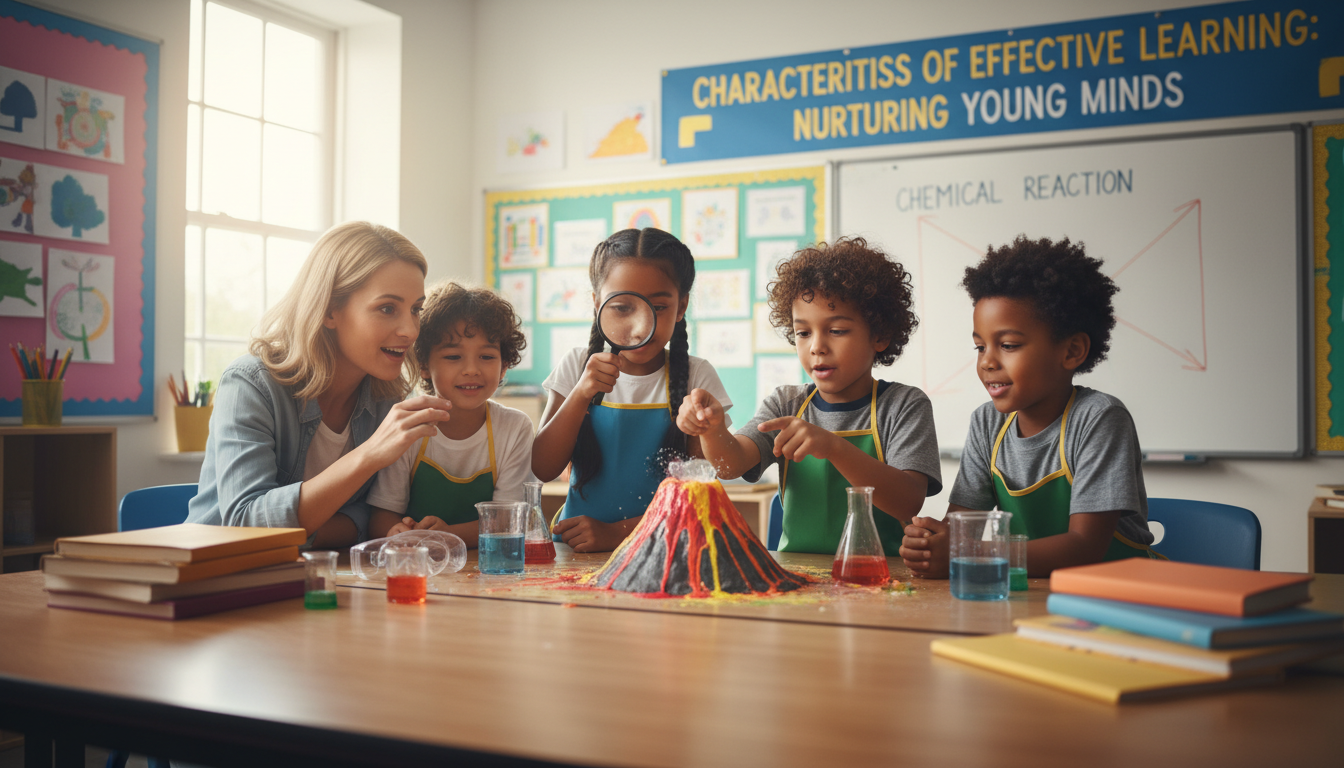
Nurturing young minds is both an art and a science, filled with delightful messiness, spark-of-curiosity moments, and—yes—an occasional toy thrown across the room. At the heart of it lies the concept of Characteristics of Effective Learning, a framework that shapes early childhood education across numerous systems like the EYFS (Early Years Foundation Stage). It’s not just about what kids learn, but how they do it—with curiosity, grit, and imagination. This article explores those characteristics, anchored in real-world settings, subtly imperfect—but that’s exactly what keeps it human.
Understanding the Three Core Characteristics
Playing and Exploring: Curiosity in Action
Playing and exploring isn’t merely fun—it’s foundational. It’s when children dig into experiences with their whole being: they touch, they test, they “have a go.” The EYFS framework explicitly includes this as a key characteristic, noting how play fuels investigation and hands-on learning.
In practice, imagine a toddler discovering balance on a beam in a playground. That wobble, that thrill, that repeated trial is more than physical—it’s how understanding builds. As one early years council notes, when children are deeply engaged in play, they’re effectively operating at their peak level.
Active Learning: Motivation and Persistence
Active learning is all about the mental hustle: concentration, effort, persistence. It’s staying the course even when a tower of blocks keeps tumbling down. According to the EYFS, this characteristic emphasizes concentration and the joy of achievement.
Some studies suggest that when children remain deeply involved in an activity, real learning is happening—right in their zone of proximal development. I’ve seen little ones stay with a jigsaw puzzle, refusing to let it win. They frown, they rearrange, and when the last piece fits—ah, the triumph!
Creating and Thinking Critically: Beyond the Obvious
Creativity and critical thinking aren’t just arts and crafts—they’re thinking skills. According to EYFS, children develop ideas, make links, and strategize how to do things.
This third characteristic dives into metacognition—thinking about thinking. It’s children figuring out their own learning paths, recognizing patterns, building strategies. Think of a group playing in the sand area: one child starts burying toy animals, another adds water to shape the “forest”… suddenly you’ve got deep, collaborative thinking in action.
“When children choose what to play with, follow their natural curiosity… deep involvement likely happens.”
— quote drawn from research-based insight
How Adults Shape These Characteristics in Real Life
Balancing Guidance and Freedom
Supporting effective learning isn’t about controlling—it’s about scaffolding. Teachers and parents must know when to step in and when to step back, creating just the right tension between support and independence. Practically, this may look like offering open-ended questions or letting children choose tools and explore solutions on their own.
Creating Space for Risk and Resilience
Children need safe space to take emotional and physical risks—to wobble so they learn balance, or to attempt something new and fail confidently. West Sussex outlines how safe risk-taking builds resilience and confidence. One teacher shared how kids testing weight-bearing blocks in the garden learn not just physics—but perseverance.
Integrating Play and Curriculum
In quality early years settings, the three characteristics span across learning areas—communication, physical skills, emotional growth, numeracy, literacy, and creativity. For instance, explorers constructing block towers (play and exploring), rebuilding them after they topple (active learning), and then reimagining new designs (creating and thinking critically)—this is holistic learning, right there.
Real-World Example: A Nursery in Action
Consider a nursery team observing a child building a sand tunnel structure. The child:
– Experiments with angles and textures (playing and exploring)
– Rebuilds after collapse (active learning)
– Adds sticks “for roof support,” connecting ideas and testing strategy (creating and thinking critically).
Teachers gently suggest possibilities (“What if you add a flat board here?”) without over-directing, offering sparing but powerful scaffolding. The result? A child who learns science, resilience, creativity, all in one go.
Why It Matters: Lifelong Learning Begins Here
These characteristics are not bedtime routines; they’re lifelong substrates. Fostering curiosity, persistence, and thinking skills from the get-go nurtures not just school readiness but confident, self-aware learners. Early years research links these traits with later academic and social success. Plus, emergent curriculum—where learning evolves from children’s interests—thrives on these same characteristics.
Concluding Summary
Building effective learning in early childhood is as unpredictable as toddlers themselves—but that’s the beauty. Through playing and exploring, active learning, and creating and thinking critically, young minds become eager, resilient, and thoughtful. Practitioners and parents who juggle the art of scaffolding, risk, and freedom pave the way for lifelong curiosity and confidence.
Next steps? Observe closely, ask open questions, steer gently, and always remember: learning happens in the joyful chaos of engagement.
FAQs
What are the three Characteristics of Effective Learning?
They are:
– Playing and exploring (curiosity-driven engagement)
– Active learning (persistence and motivation)
– Creating and thinking critically (idea generation, problem-solving, and reflection)
How does adult interaction support these characteristics?
Adults guide by offering right-time prompts, asking reflective questions, and knowing when to step back. This supports independence while still enriching the child’s learning experience.
Why isn’t it just about academic content?
Because how children learn—through exploration, perseverance, and creative thinking—is foundational to all learning. Nurturing these traits supports adaptability and engagement beyond specific lessons.
Can these learning characteristics develop outside formal settings?
Absolutely. These traits can flourish during play, family routines, outdoor exploration—anywhere kids feel curious, supported, and free to try things.
