

 February 7, 2026
  6 Min
6 Min  No Comment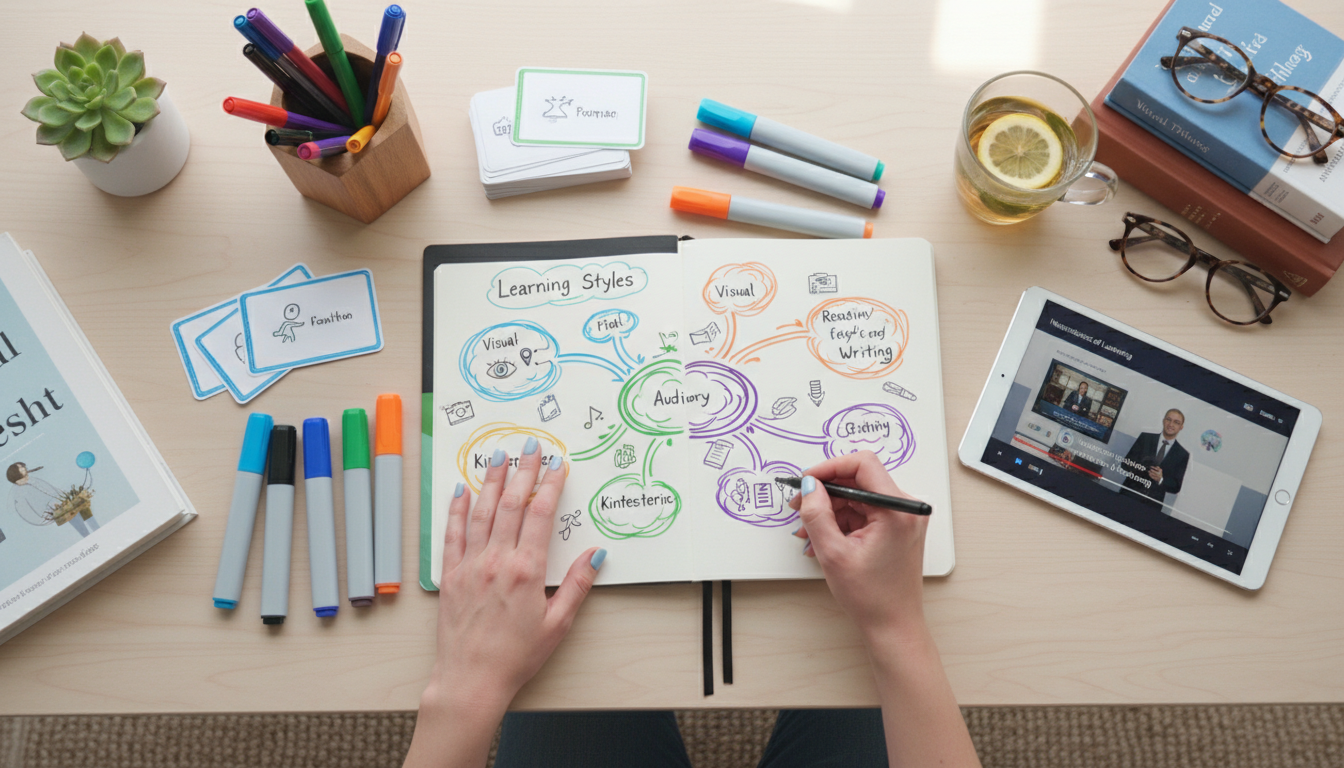
It’s funny—most of us think, “Oh, I know how I learn,” but actually, we’re just guessing. Maybe you breeze through videos, or tend to doodle notes, or simply need a conversation to cement ideas. Diving into learning styles means unpacking more than just “visual vs auditory”—it’s about you, your habits, your quirks, your misfires, even that one time you learned something completely backwards then suddenly it clicked.
What really matters is discovering how you learn best, which unlocks deeper engagement, better retention, and, yes, less snoozing through lectures. This article takes you beyond the common tropes, weaving in personal insight, expert-era perspectives, and real-world practices—so you can meet yourself where you are, imperfect, diverse, and fully capable.
Why Learning Styles Go Beyond VAK (Visual, Auditory, Kinesthetic)
The popular VAK model (visual, auditory, kinesthetic) has been around a while, and because it’s simple, it’s tempting to latch onto. But reality’s messier. Plenty of adult learners identify as visual—until they’re lost in dense diagrams. Others dislike hearing their own voice, but thrive when explaining concepts to a friend (that’s auditory, but only when spoken aloud).
Critique and Evolving Models
Beyond VAK, multidimensional frameworks like the Felder–Silverman model and Kolb’s experiential learning have gained traction. They account for dimensions such as:
- Active vs reflective
- Sequential vs global thinking
- Concrete vs abstract processing
These richer models acknowledge that late-night comprehenders might reflect quietly at first, then explode into a flurry of insight when the pressure hits. There’s also the idea of ‘dual coding,’ which pairs visual + verbal, working together in a way that neither would alone.
Even neuroscience hints at overlapping networks—processing isn’t neatly segmented by sense receptors. Still, learners often experience preferences, even if the brain handles stimuli in integrative ways. Thinking of yourself as having a “learning preference” is more helpful than claiming you learn only one way.
Practical Ways to Discover Your Learning Tendencies
Exploring your own learning habits is not rocket science. It’s more like journaling with a curious lens. Here’s how:
-
Trial a Range of Formats
Try listening to a podcast, watching a short explainer video, drawing mind maps, or writing out ideas. Notice which feel energizing and which zap you. -
Reflect After Learning Sessions
Ask: Did this stick because I spoke it, drew it, explained it to someone, or rewrote it? Those small reflections point to your strengths. -
Mix and Match
You might love videos to start, diagrams to organize, and discussion to cement. That’s not confusion—it’s blending modes for deeper learning. -
Embrace Mistakes
If you keep spacing out during audio lectures, maybe it’s not your zone—but maybe switching to short bullet notes or replaying in bursts could help. Experimenting matters.
Real-World Examples: Diverse Paths to Learning
Across industries, people discover their best style by tinkering or necessity.
-
Software developers often learn via documentation (reading) then memorize via building projects (kinesthetic). One mid-career coder said, “I can read tutorial all day, but I only get it once I try it and break it.” That’s a valuable mix of reading + doing.
-
Language learners might start with flashcards (visual), then move to speaking in study groups (auditory). One learner describes, “I write sentences, then actually texting in that language is the moment it becomes real.”
These examples show that even seasoned professionals shift modes depending on phase—intake, processing, application. That fluidity is a strength, not confusion.
Balancing Structure with Flexibility
Rigidly labeling yourself creates friction. Instead, cultivate a flexible toolkit:
Structured Approaches
- Visual organizers like mind maps or flowcharts help structure complex information, especially for global thinkers.
- Spaced repetition systems (SRS) help formalize recall, great for abstract-heavy topics like history or medical vocabulary.
- Teaching others, even in informal settings, solidifies knowledge—this taps verbal and social learning.
Flexible Mindsets
Recognize when your energy is low—maybe brief audio summaries work better. If you feel stuck, sketch. If bored, narrate aloud or teach someone else that snippet. That improvisation is human, and powerful.
As one educator notes:
“Learning preferences reflect our styles, not our limits. A flexible mixture usually wins over strict categories.”
Putting It All Together: A Personalized Learning Framework
Here’s a light framework you can adopt:
1. Scan – Intake info via different modes (read, watch, listen).
2. Assess – Which mode felt easiest, more engaging?
3. Process – Use summary tasks: doodle, talk, write, teach.
4. Apply – Do something: build, test yourself, explain it.
5. Reflect – Jot quick notes: What clicked? Where did I struggle?
6. Adjust – Amp time in methods that worked; reduce those that didn’t.
Make a tiny spreadsheet if you want, but even mental notes count. Over time, patterns emerge, and those patterns guide smarter effort—not blind habits.
Common Misunderstandings and Pitfalls
Some common traps lurk:
- Mistaking boredom for a poor style: If videos feel dull, it could be the speaker, not your style. Swap to engaging content or different creators before dismissing the mode outright.
- Overcommitment to one mode: “I’m strictly visual” might hold you back when textual nuance matters—like in legal or scientific domains.
- Ignoring phase differences: First exposure vs deep understanding are different. You might listen to overview but need diagrams later to synthesize. Respect phase needs.
Conclusion
Understanding your learning style isn’t about boxing yourself into “one way”—it’s about discovering what works right now, what blends help, and how to pivot when energy, topic, or context shifts. It’s messy, occasionally contradictory, but immensely liberating. Begin with curiosity, log responses, reflect honestly—and let that guide a dynamic, personalized learning pathway.
FAQs
What if I don’t fit neatly into one learning style?
Many people use a blend of styles depending on the task. It’s more helpful to identify when each mode works best rather than forcing one label.
Is the VAK model still useful?
VAK offers a simple entry point, but richer models like Felder–Silverman provide more realistic dimensions of how people engage with material. Use VAK cautiously as a starting lens, not a rulebook.
Can learning styles change over time?
Absolutely—context, topic, mood, and life stage can shift your preferences. Flexibility trumps rigidity; check in with yourself periodically to stay aligned.
Are there tools to help explore learning styles?
Yes, you can use online quizzes or frameworks like Kolb’s learning style inventory. But first, try your own “micro-experiments”—they’re low effort and often reveal more.
Should teachers adapt to each student’s learning style?
In ideal scenarios, yes—diversifying presentation (visual, verbal, interactive) supports more learners. At minimum, students benefit when they are encouraged to apply learning in their preferred way.
How to prevent boring myself while learning?
Switch up modes—read briefly, draw a sketch, explain aloud, test yourself. Rest breaks and novelty (new format or context) can reignite attention.
