

 March 22, 2026
  12 Min
  No Comment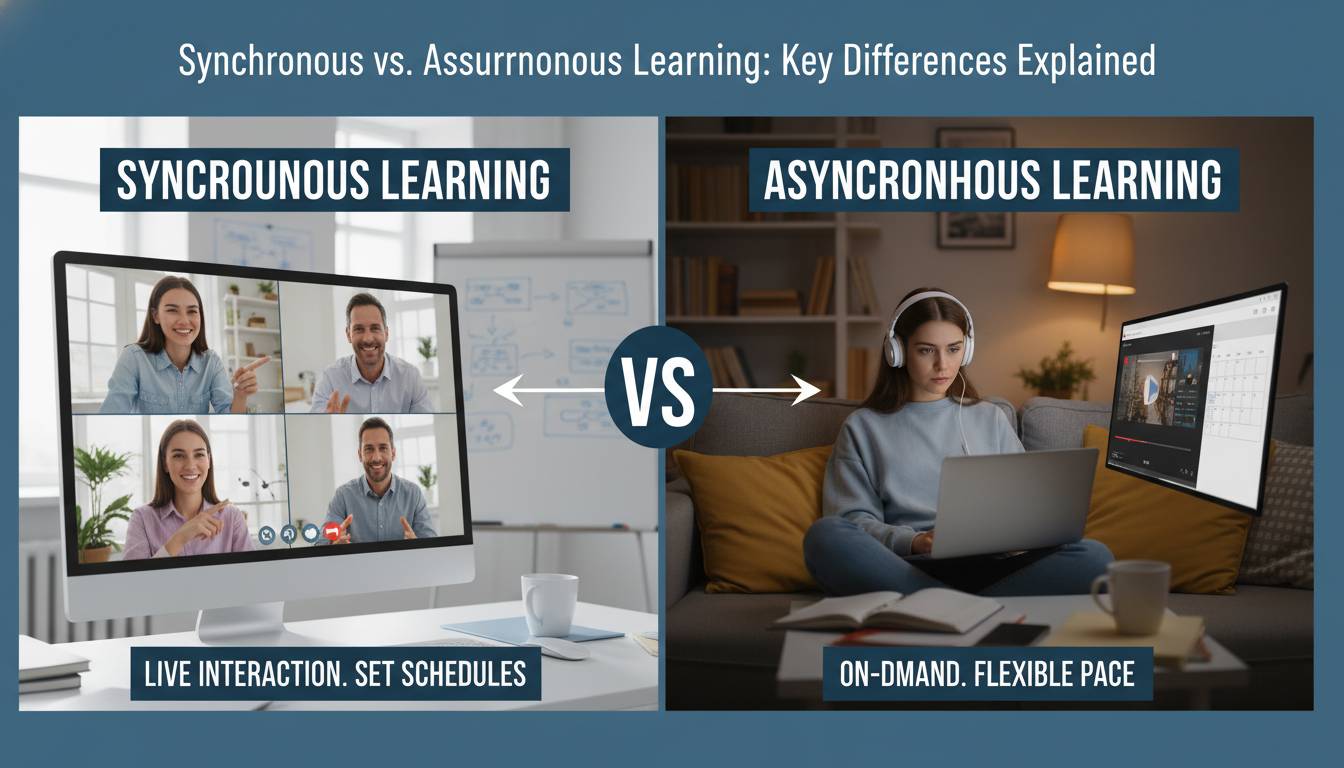
In the rapidly evolving landscape of education and corporate training, understanding the fundamental differences between synchronous and asynchronous learning has become essential for educators, instructional designers, and learners alike. These two modalities represent distinct approaches to knowledge delivery, each offering unique advantages and facing specific challenges. While synchronous learning emphasizes real-time interaction and immediate feedback, asynchronous learning prioritizes flexibility and self-paced progression. This comprehensive guide explores the key characteristics, benefits, limitations, and optimal use cases for each approach, helping you make informed decisions about which learning format—or combination thereof—best suits your educational objectives.
What Is Synchronous Learning?
Synchronous learning refers to educational experiences where all participants engage in learning activities simultaneously, in real time. This traditional learning format mimics the conventional classroom environment, where instructors and learners are present at the same moment, whether physically in the same location or connected through digital communication technologies.
Characteristics of Synchronous Learning
Synchronous learning is defined by several distinguishing features that set it apart from other modalities. The most prominent characteristic is real-time interaction, which allows for immediate feedback, spontaneous questions, and dynamic discussions. Participants engage with instructors and peers concurrently, creating a shared learning experience that unfolds in the present moment.
Common examples of synchronous learning include live video conferences, webinars, virtual classrooms, in-person lectures, telephone-based training sessions, and chat-based discussions. In these formats, participants typically follow a predetermined schedule, joining sessions at specific times rather than accessing content at their convenience.
The social nature of synchronous learning fosters community building and peer-to-peer engagement. Learners can observe nonverbal cues, participate in impromptu discussions, and develop relationships with instructors and classmates. This social dimension often enhances motivation and accountability, as learners feel a sense of obligation to attend sessions and contribute to group activities.
Advantages of Synchronous Learning
Research in educational psychology consistently highlights several benefits associated with synchronous learning environments. Immediate feedback stands as one of the most significant advantages, allowing instructors to clarify misconceptions in real time and address questions as they arise. This instant interaction can accelerate the learning process and prevent the reinforcement of incorrect information.
Synchronous formats also promote higher levels of engagement through interactive elements such as polls, breakout rooms, collaborative exercises, and live demonstrations. The presence of an instructor facilitates structured learning pathways and ensures that complex topics receive adequate explanation and scaffolding.
Additionally, synchronous learning supports the development of soft skills including verbal communication, active listening, and real-time collaboration. These interpersonal competencies prove valuable in professional contexts where teamwork and effective communication are essential.
What Is Asynchronous Learning?
Asynchronous learning encompasses educational experiences where learners access content and complete activities independently, without requiring simultaneous participation from instructors or peers. This self-paced approach allows individuals to engage with learning materials according to their own schedules, preferences, and learning rhythms.
Characteristics of Asynchronous Learning
The hallmark of asynchronous learning is temporal flexibility. Learners can access pre-recorded lectures, written materials, interactive modules, and multimedia content at any time, from any location with internet connectivity. This autonomy over timing distinguishes asynchronous learning from its synchronous counterpart and addresses many logistical constraints that prevent learners from attending live sessions.
Asynchronous formats typically rely on structured content delivery systems such as learning management systems (LMS), content libraries, and digital repositories. Learners navigate through materials independently, progressing through modules at speeds that match their prior knowledge, available time, and learning preferences.
Discussion forums, message boards, and email exchanges facilitate asynchronous communication, allowing participants to contribute thoughts and responses on their own schedules. While these interactions lack the immediacy of synchronous communication, they often produce more thoughtful, reflective contributions as learners have time to formulate considered responses.
Advantages of Asynchronous Learning
The flexibility inherent in asynchronous learning makes it particularly valuable for adult learners balancing professional responsibilities, family obligations, and other commitments. Learners in different time zones, shift workers, and individuals with unpredictable schedules benefit tremendously from the ability to access content when convenient.
Asynchronous learning also accommodates diverse learning paces. Students who require additional time to grasp complex concepts can review materials repeatedly without feeling rushed, while those with prior knowledge can skip familiar content and proceed directly to new material. This personalization enhances learning efficiency and learner satisfaction.
From an organizational perspective, asynchronous learning often proves more cost-effective than synchronous alternatives. Once developed, asynchronous content can serve unlimited learners without additional instructor time, and learners can access materials simultaneously without bandwidth constraints associated with live streaming.
Key Differences Between Synchronous and Asynchronous Learning
Understanding the distinctions between these learning modalities helps educators and organizations select appropriate approaches for specific learning objectives.
Time and Scheduling
The most fundamental difference lies in temporal coordination. Synchronous learning requires all participants to be present at the same time, creating scheduling dependencies that can challenge learners with conflicting obligations. Asynchronous learning eliminates these scheduling constraints, allowing learners to engage with content according to their own timelines.
This difference has profound implications for accessibility. Synchronous sessions exclude participants who cannot attend due to time zone differences, work schedules, or personal commitments. Asynchronous formats welcome participation from diverse populations without requiring schedule adjustments.
Interaction Patterns
Synchronous learning facilitates immediate, bidirectional communication. Questions receive instant responses, discussions flow naturally, and social cues inform interaction dynamics. This real-time exchange mimics natural conversation patterns and supports nuanced, complex exchanges that benefit from spontaneity.
Asynchronous communication, by contrast, involves delayed responses. Learners post questions and wait for replies, discussions unfold over hours or days rather than minutes, and the lack of immediate feedback requires greater self-direction and persistence. However, asynchronous interactions often encourage more comprehensive, researched responses since participants have time to gather information before contributing.
Content Delivery and Control
In synchronous environments, instructors control content delivery pacing, guided by group dynamics and real-time assessment of learner comprehension. The instructor determines when to proceed to new material, when to pause for questions, and when to revisit challenging concepts. This structured approach ensures consistent coverage but may not accommodate individual learning needs.
Asynchronous learning transfers pacing control to individual learners. Students decide how long to spend on each module, when to take breaks, and in what sequence to approach materials. This learner autonomy supports differentiated instruction but requires greater self-regulation and metacognitive skills.
Technology Requirements
Synchronous learning typically demands robust, reliable internet connectivity and real-time communication platforms capable of supporting video streaming, audio transmission, and interactive features. Technical failures during synchronous sessions disrupt learning experiences and require contingency plans.
Asynchronous learning technology requirements are generally more forgiving. Learners can download content for offline access, and platforms need only support content storage and retrieval rather than real-time streaming. This resilience makes asynchronous formats more accessible in areas with limited or unreliable internet connectivity.
Pros and Cons Comparison
| Aspect | Synchronous Learning | Asynchronous Learning |
|---|---|---|
| Flexibility | Fixed schedules required | Self-paced, flexible timing |
| Immediate Feedback | Yes, instant responses | No, delayed or self-assessed |
| Social Interaction | Rich, real-time engagement | Limited, time-delayed interaction |
| Accessibility | Time-zone dependent | Available anytime, anywhere |
| Cost Efficiency | Ongoing instructor time needed | Lower long-term costs |
| Self-Pacing | Limited, group-paced | Full learner control |
| Technical Requirements | High-bandwidth, real-time | More forgiving, offline options |
| Soft Skills Development | Verbal communication, collaboration | Self-direction, reflection |
When Synchronous Learning Works Best
Synchronous formats excel in scenarios requiring real-time practice, immediate clarification, or interpersonal skill development. Language learning benefits tremendously from synchronous practice, as conversational skills require live interaction. Complex troubleshooting, role-playing exercises, and simulations also suit synchronous delivery, as immediate feedback enhances skill acquisition.
High-stakes training scenarios, such as safety procedures or compliance requirements, often employ synchronous formats to ensure all learners receive consistent messaging and can ask clarifying questions. The accountability inherent in scheduled sessions helps ensure completion in mandatory training contexts.
When Asynchronous Learning Works Best
Asynchronous learning proves ideal for foundational knowledge transfer, compliance training, and content that learners will reference repeatedly. When learners need flexibility or when participant schedules span multiple time zones, asynchronous formats remove significant barriers to participation.
Organizations with distributed workforces, multinational operations, or shift-based employees often find asynchronous learning essential for ensuring consistent training access. Additionally, asynchronous formats support just-in-time learning, allowing employees to access relevant information exactly when needed for specific tasks.
Hybrid and Blended Learning Approaches
Many educational organizations now recognize that optimal learning outcomes often result from combining synchronous and asynchronous elements in blended formats. This hybrid approach leverages the strengths of each modality while mitigating their respective limitations.
A common blended model incorporates asynchronous content delivery for foundational knowledge acquisition, supplemented by synchronous sessions for application, discussion, and clarification. Learners acquire baseline knowledge independently before convening for interactive sessions that deepen understanding and address questions arising from self-study.
This combination proves particularly effective in corporate training contexts, where employees need flexible access to core content but benefit from live sessions for complex topics, team-based projects, and stakeholder engagement. The asynchronous component ensures consistent knowledge delivery at scale, while synchronous sessions provide the interaction and accountability that drive behavioral change.
Technology Considerations
Selecting appropriate technology platforms significantly impacts the effectiveness of both synchronous and asynchronous learning implementations. For synchronous delivery, video conferencing platforms such as Zoom, Microsoft Teams, or Google Meet provide reliable real-time communication with features including breakout rooms, polling, and screen sharing. Learning management systems like Canvas, Blackboard, or Moodle support asynchronous delivery by organizing content, tracking progress, and facilitating discussion.
Effective asynchronous platforms should offer intuitive navigation, robust search functionality, accessibility features, and analytics that help instructors identify learners struggling with content. Mobile compatibility proves increasingly important as learners access materials from smartphones and tablets during commutes or breaks.
The technical infrastructure supporting synchronous sessions requires attention to bandwidth, redundancy, and user support. Organizations should test platforms thoroughly, provide technical guidance to participants, and develop contingency procedures for common technical difficulties.
Best Practices for Implementation
Successful implementation of either learning modality requires thoughtful design and ongoing refinement. For synchronous sessions, instructors should prepare detailed agendas, incorporate interactive elements regularly, and create opportunities for participant engagement beyond passive viewing. Recording sessions allows asynchronous review and accommodates learners unable to attend live.
For asynchronous learning, content designers should structure materials clearly, provide multiple modalities for key concepts, and include regular self-assessment opportunities. Discussion prompts should encourage critical thinking rather than simple confirmation of reading completion. Regular instructor presence in discussion forums, through thoughtful responses and periodic summaries, maintains engagement and models expected participation quality.
Regardless of modality, learning objectives should drive format selection rather than convenience or familiarity. Complex skills requiring practice and feedback may warrant synchronous components, while foundational knowledge transfer often suits asynchronous delivery. The most effective programs thoughtfully integrate both approaches based on specific learning goals.
Frequently Asked Questions
What is the main difference between synchronous and asynchronous learning?
The primary difference lies in timing: synchronous learning requires all participants to be present simultaneously for real-time interaction, while asynchronous learning allows learners to access materials independently on their own schedules. Synchronous formats emphasize live interaction and immediate feedback, whereas asynchronous formats prioritize flexibility and self-paced progression.
Which learning method is more effective?
Neither modality is universally superior; effectiveness depends on learning objectives, content type, and learner circumstances. Synchronous learning tends to excel for skill development requiring practice and feedback, complex problem-solving, and building interpersonal skills. Asynchronous learning works well for foundational knowledge transfer, compliance training, and situations requiring schedule flexibility. Research suggests blended approaches often yield optimal outcomes by combining both modalities strategically.
Is asynchronous learning easier than synchronous learning?
Asynchronous learning offers greater scheduling flexibility but demands more self-direction and time management from learners. Some participants find the independence challenging, while others thrive with control over their learning pace. Synchronous learning provides more structure and immediate support but requires schedule commitment and may challenge learners in different time zones or with inflexible schedules.
Do employers prefer synchronous or asynchronous training?
Employer preferences vary based on training objectives, workforce distribution, and organizational culture. Many employers appreciate asynchronous training for its cost-effectiveness and accessibility, particularly for onboarding, compliance training, and self-service skill development. Synchronous training often preferred for leadership development, team-building activities, and complex technical training requiring immediate troubleshooting.
Can synchronous and asynchronous learning be combined?
Yes, blended or hybrid learning approaches combine both modalities strategically. A common model uses asynchronous content delivery for foundational knowledge, supplemented by synchronous sessions for application, discussion, and clarification. This approach leverages the flexibility of asynchronous learning while preserving the interactive benefits of synchronous engagement.
What technology do I need for asynchronous learning?
Asynchronous learning typically requires a learning management system (LMS) or content platform, internet connectivity, and a device for accessing materials. Many platforms offer mobile apps enabling offline access to downloaded content. Basic technical requirements are generally more accessible than synchronous learning, which demands reliable, high-bandwidth internet for real-time video and audio transmission.
Conclusion
Both synchronous and asynchronous learning offer valuable approaches to education and training, each with distinct strengths and limitations. Synchronous learning excels at facilitating real-time interaction, immediate feedback, and community building, making it ideal for skill development and complex topics requiring live engagement. Asynchronous learning provides essential flexibility, accessibility, and cost-effectiveness for foundational knowledge transfer and diverse learner populations.
Rather than viewing these modalities as competing alternatives, educational organizations benefit from considering them complementary tools within a comprehensive learning strategy. By understanding the unique characteristics of each approach and aligning format selection with specific learning objectives, instructors and organizations can optimize learner outcomes while accommodating the practical constraints of real-world implementation. The most effective learning experiences often emerge from thoughtful blending of both synchronous and asynchronous elements, creating flexible, engaging educational pathways that meet diverse learner needs.