

 March 20, 2026
  12 Min
  No Comment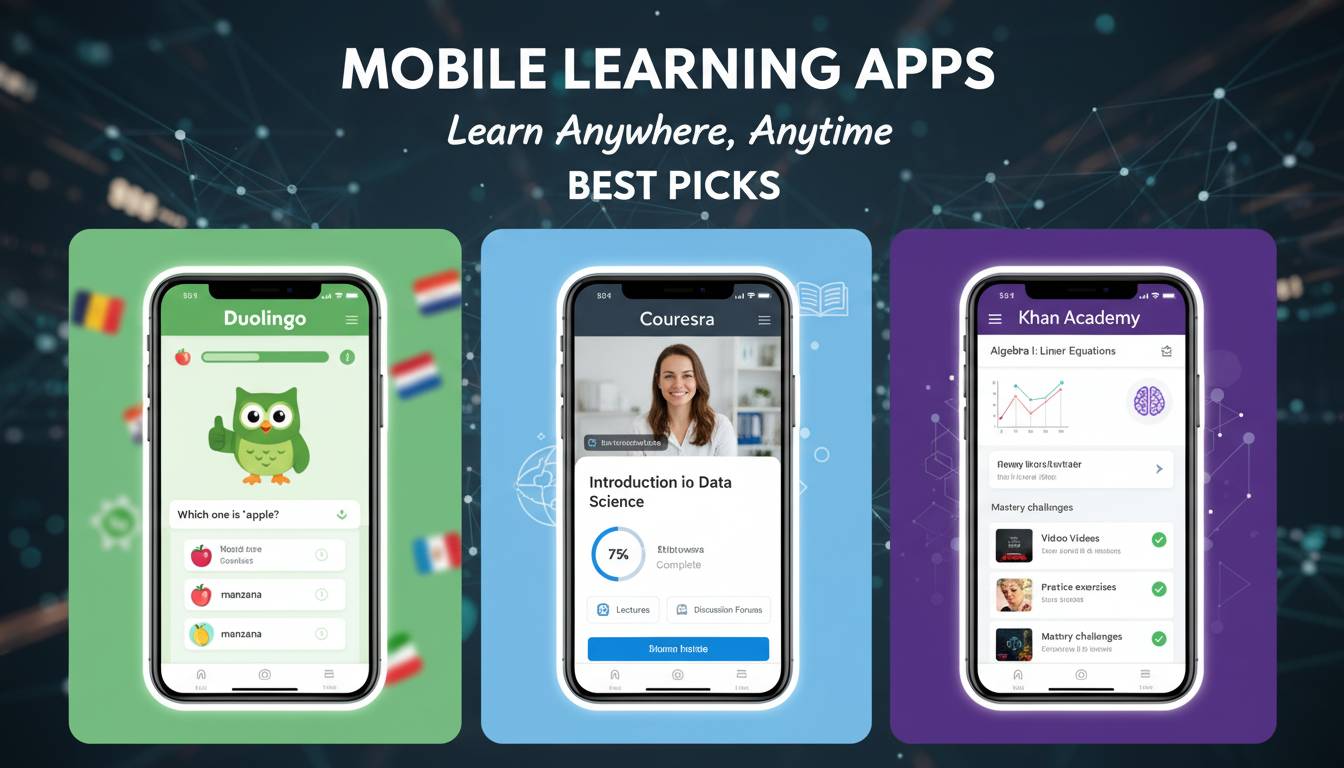
Mobile learning has fundamentally transformed how people acquire new skills and knowledge. With over 90% of Americans owning smartphones and the average person spending nearly four hours daily on their devices, learning apps have become the gateway to on-demand education. Whether you’re mastering a new language during your commute, learning to code on your lunch break, or picking up photography skills before bed, mobile learning apps put comprehensive educational resources literally in your pocket.
This guide explores everything you need to know about mobile learning apps—from understanding their core functionality and key features to selecting the right platforms for your specific goals. We’ll examine top-rated options across major categories, share expert insights on effective learning strategies, and provide actionable tips to help you get the most out of your mobile education journey.
Understanding Mobile Learning Apps
Mobile learning applications are software programs designed specifically for smartphones and tablets that deliver educational content in formats optimized for smaller screens and on-the-go usage. Unlike traditional e-learning platforms that merely shrink desktop websites, purpose-built mobile learning apps leverage unique device capabilities to create engaging, interactive experiences.
The global mobile learning market reached approximately $27 billion in 2023 and continues growing at over 17% annually, driven by increasing smartphone penetration, improved internet connectivity, and shifting consumer preferences toward flexible learning solutions. This growth reflects a broader transformation in how people approach personal development—moving away from rigid classroom schedules toward bite-sized, self-paced instruction that fits modern lifestyles.
What distinguishes effective mobile learning apps from simple content repositories is their thoughtful integration of learning science principles. The best applications incorporate spaced repetition algorithms that optimize memory retention, adaptive difficulty systems that keep learners in their optimal challenge zone, and progress tracking that provides meaningful feedback. Many platforms now employ gamification elements including points, badges, and leaderboards—not as mere superficial rewards, but as tools that leverage psychological principles of motivation and habit formation.
Mobile learning apps generally fall into several distinct categories based on their primary function. Language learning platforms like Duolingo and Babbel focus on vocabulary acquisition and conversational skills through interactive exercises. Professional development apps such as LinkedIn Learning and Coursera deliver business, tech, and creative skills through video tutorials and hands-on projects. Hobbyist learning apps cover everything from musical instruments to cooking techniques through video demonstrations and step-by-step guides. Test preparation applications help students and professionals pass exams through adaptive practice questions and simulated testing environments.
Key Features to Look For in a Learning App
Not all mobile learning apps deliver comparable educational value. Understanding which features genuinely enhance learning outcomes—and which are merely marketing distractions—helps you make informed selection decisions.
Adaptive Learning Technology represents one of the most valuable innovations in modern educational technology. Apps with adaptive systems analyze your performance data to automatically adjust content difficulty, recommend personalized study paths, and identify knowledge gaps requiring additional attention. This personalization ensures you’re neither bored with material that’s too easy nor frustrated by content that moves too quickly. Research from the Journal of Educational Psychology indicates that adaptive learning systems can improve knowledge retention by up to 30% compared to static content delivery.
Offline Access functionality has become increasingly important as learners incorporate education into varied environments. The ability to download lessons, exercises, and content libraries for offline use means you can continue learning during flights, in areas with poor connectivity, or when you simply want to minimize data usage. This feature transforms previously “dead” time into productive learning opportunities.
Progress Synchronization across devices ensures your learning journey continues seamlessly whether you’re switching between phone, tablet, and computer. Imagine starting a Spanish vocabulary lesson on your phone during your morning commute, then continuing where you left off on your tablet at home. This continuity eliminates friction and helps maintain consistent learning habits.
Interactive Elements distinguish effective learning apps from digital textbooks. Look for applications incorporating quizzes with immediate feedback, interactive simulations, voice recognition for language practice, and augmented reality features that overlay educational content onto your physical environment. These interactive components actively engage learners rather than passively presenting information, significantly improving knowledge transfer and retention.
Certificate and Credential Systems add tangible value to your learning investment. Many platforms now offer completion certificates, professional certifications, and even full degree programs that employers recognize. When an app provides verifiable credentials, your learning efforts translate into concrete professional advantages.
Top Mobile Learning Apps for Every Goal
The ideal learning app depends entirely on what you want to achieve. Here’s a breakdown of leading options across major categories.
Language Learning
Duolingo remains the most downloaded language learning application worldwide, offering courses in over 40 languages through gamified lessons that feel more like games than studying. Its free tier provides substantial value, while Duolingo Plus ($12.99/month) removes ads and enables offline downloads. The platform’s bite-sized lessons (typically 5-10 minutes) make it ideal for casual learners seeking consistent daily practice.
Babbel takes a more conversational approach, focusing on practical dialogue and real-world communication from the first lesson. Priced at $13.95/month for annual subscriptions, it provides more structured curriculum than Duolingo, making it suitable for serious learners who want genuine fluency rather than basic vocabulary.
Rosetta Stone pioneered language learning software and continues offering its immersive approach, which teaches languages without translation. At $11.99/month, it appeals to learners who prefer learning through context and visual associations rather than explicit grammar instruction.
Professional Skills
LinkedIn Learning provides over 16,000 courses covering business, tech, and creative skills, taught by industry experts. Included with LinkedIn Premium subscriptions (starting at $29.99/month), it’s particularly valuable for career-focused professionals seeking specific skill development.
Coursera partners with universities and companies to offer courses, professional certificates, and even full degrees. While many courses are free to audit, certificates require payment. Specializations and professional certificates ($39-$99/month) provide structured learning paths with hands-on projects.
Udemy hosts over 200,000 video courses across virtually every topic imaginable. With frequent sales bringing individual courses to $19.99 or less, it offers exceptional breadth at accessible prices. Quality varies by instructor, but top-rated courses provide excellent value.
Academic and Test Preparation
Khan Academy offers completely free, standards-aligned instruction in math, science, humanities, and test preparation. Its nonprofit mission means no subscription fees or advertising, making it an outstanding resource for students and lifelong learners alike.
Quizlet provides flashcard-based learning and practice tools, with user-created content covering millions of subjects. The Quizlet Plus subscription ($11.99/year) adds guided learning modes and content creation features.
Chegg Study focuses on textbook solutions and homework help, with subscriptions starting at $15.95/month. It’s particularly valuable for college students needing assistance with specific textbook problems.
Hobby and Lifestyle
MasterClass offers celebrity-taught courses in cooking, writing, photography, music, and more. At $15/month or $120/year, it provides polished production quality and inspirational instruction, though practical skill development varies by topic.
Skillshare emphasizes creative and entrepreneurial skills through project-based learning. With over 35,000 classes and a community aspect, it suits visual learners who benefit from seeing projects completed in real-time. Subscriptions cost $13.99/month or $99.99/year.
How to Choose the Right Learning App
Selecting the optimal mobile learning app requires honest self-assessment and clear goal definition. Rushing this decision often leads to subscription fatigue and abandoned accounts.
Start by identifying your primary motivation. Are you learning for career advancement, personal enrichment, academic requirements, or hobby enjoyment? This fundamental question dramatically narrows your options and helps prioritize features that matter for your specific situation. A professional seeking a career change needs different functionality than a retiree exploring a new passion.
Evaluate your available time realistically. Some apps require 30+ minutes daily for meaningful progress, while others accommodate five-minute sessions. If you have unpredictable schedules, prioritize platforms with flexible lesson lengths and robust offline functionality. Attempting to use an intensive learning app when you only have fragmented time available virtually guarantees failure.
Consider your learning style preferences. Do you prefer structured curricula that guide you through material sequentially, or freedom to explore topics in any order? Are you motivated by gamification and rewards, or do you find such elements distracting? Would you rather watch video instruction or read written content? Most platforms offer free trials or limited free tiers—use these to experience the learning approach before committing financially.
Budget matters, but cheapest isn’t always most economical. A $15/month subscription you actually use delivers more value than a free app you abandon after one week. Calculate your effective cost per completed lesson rather than simply comparing monthly prices.
Finally, check platform reviews across multiple sources, paying particular attention to recent user experiences. Learning apps frequently update their features, and today’s excellent platform may become tomorrow’s disappointment—or vice versa.
Maximizing Your Learning Results
Having the right app matters less than how you use it. Research-backed learning strategies dramatically improve outcomes regardless of which platform you choose.
Consistency outperforms intensity. Research consistently shows that distributed practice—shorter sessions spread across many days—produces better long-term retention than cramming equivalent total time into fewer, longer sessions. Aim for daily practice even if just 10-15 minutes, rather than occasional marathon study sessions.
Active recall fundamentally improves memory. Rather than passively re-reading notes or rewatching lessons, test yourself on material you’ve learned. The effort involved in retrieving information strengthens memory pathways. Most quality learning apps incorporate this principle automatically through quizzes and practice exercises—ensure you’re completing these actively rather than skipping through them.
Connect new information to existing knowledge. Learning doesn’t happen in isolation. When studying a new concept, consciously relate it to things you already understand. This association creates more robust memory networks that are easier to access later.
Apply knowledge immediately. Reading about photography techniques while never picking up a camera produces minimal skill development. Seek opportunities to use newly learned material right away—practice conversation phrases with native speakers, build a website using your coding knowledge, or cook a dish following your new culinary techniques.
Track your progress and set milestones. Visualizing improvement maintains motivation and helps identify patterns in your learning. Most apps provide progress dashboards—use them. Additionally, set specific, measurable goals beyond generic aspirations like “learn Spanish.” Targeting completion of a specific course level by a particular date provides clear direction.
The Future of Mobile Learning
Mobile learning continues evolving rapidly, with several significant trends reshaping the landscape.
Artificial intelligence integration is transforming personalized learning. AI-powered systems now provide instant feedback on writing assignments, analyze speech patterns for language learners, generate custom practice problems based on individual weaknesses, and even serve as patient practice partners for developing conversational skills. As these technologies mature, expect increasingly sophisticated personalization that adapts to each learner’s unique cognitive patterns.
Micro-credentialing is gaining momentum as traditional degrees face scrutiny for their cost and relevance. Professional certificates, nanodegrees, and digital badges from learning platforms increasingly signal competency to employers. This shift makes mobile learning not just convenient but strategically valuable for career development.
Social and collaborative learning features are becoming standard rather than exceptional. Discussion forums, study groups, peer review systems, and collaborative projects address the isolation many learners experience with digital education. These social elements leverage community support to maintain motivation and provide diverse perspectives on course material.
Augmented reality is opening entirely new learning possibilities. Imagine learning anatomy by examining 3D organ systems projected onto your desk, or practicing furniture arrangement by visualizing pieces in your actual room. While still emerging, AR features in learning apps point toward increasingly immersive educational experiences.
The mobile learning revolution represents more than technological convenience—it reflects a fundamental democratization of education. Geographic location, financial constraints, and rigid scheduling no longer determine access to quality instruction. The tools exist today for anyone with a smartphone to develop marketable skills, explore new interests, and pursue intellectual growth on their own terms.
Frequently Asked Questions
Are free learning apps as effective as paid ones?
Free apps like Duolingo and Khan Academy provide genuine educational value and work well for many learners. However, paid subscriptions typically offer advanced features like offline access, ad-free experiences, more comprehensive curricula, and certificates. For casual learning or initial exploration, free tiers often suffice. For serious skill development or professional advancement, paid features frequently justify their cost through improved convenience and outcomes.
How long does it take to learn something using a mobile app?
Learning timelines vary dramatically based on the subject, your starting point, and the time invested. Basic conversational phrases in a new language might take weeks, while achieving intermediate proficiency typically requires months of consistent practice. Learning complex technical skills or reaching fluency in a language often takes years. Most apps provide realistic timeframe estimates based on their recommended study pace—treat these as minimums rather than guarantees.
Can mobile learning apps replace traditional education?
Mobile learning apps excel at skill acquisition, supplemental education, and flexible skill development. However, they cannot fully replicate the comprehensive experiences of traditional education—including hands-on laboratory work, structured curricula, personal mentorship, and social development opportunities. For many goals, mobile apps provide sufficient learning; for others, they serve as valuable supplements to formal education.
Which learning app is best for complete beginners?
The best app for beginners depends entirely on what they want to learn. Duolingo and Babbel excel for language beginners. Khan Academy serves students beginning their academic journeys. Udemy and Skillshare offer accessible introductions to countless hobbies and professions. Identify your goal first, then research which platforms excel in that specific area before committing time or money.