

 February 6, 2026
  5 Min
5 Min  No Comment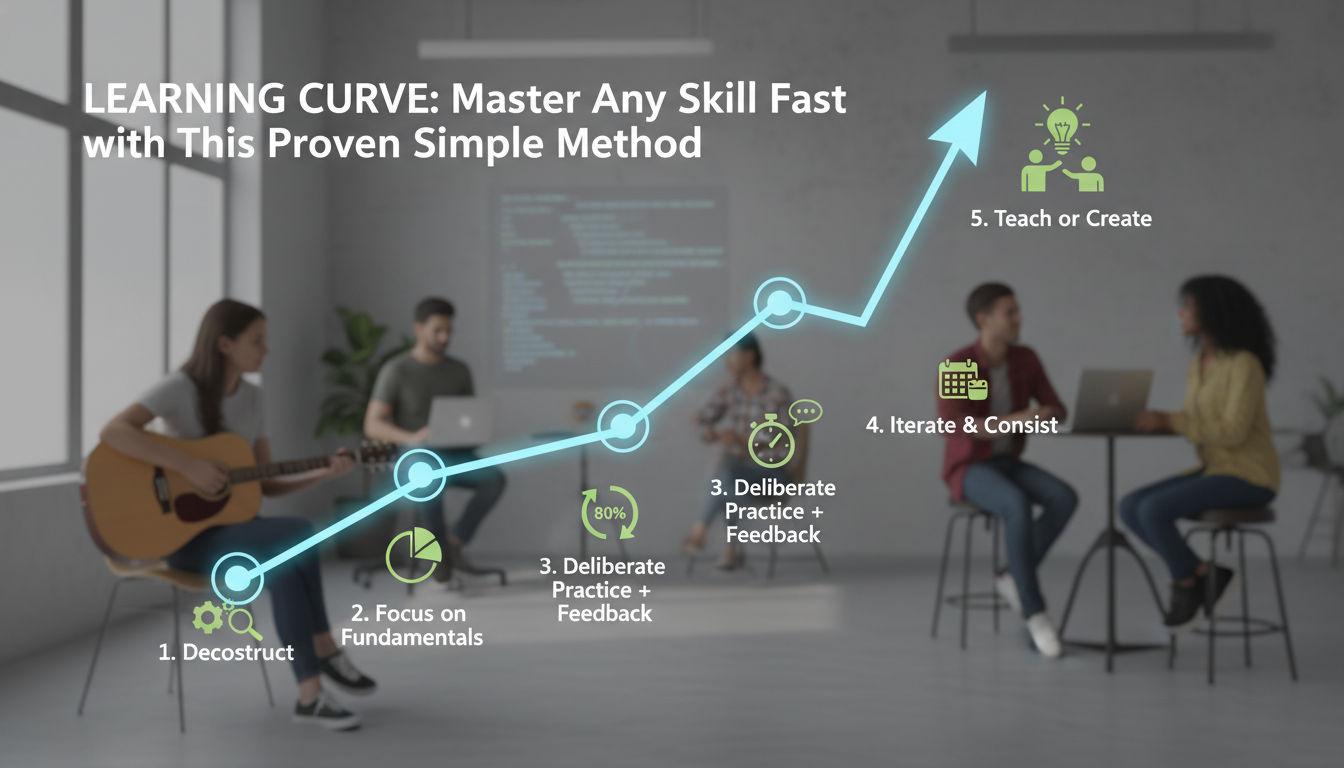
Ever tried to master something new—and felt stuck in that awkward, fumbling beginner stage? You’re not alone. The concept of a learning curve captures that journey: your skills improve with experience, but the path rarely feels smooth. Yet among the complex theories, there’s a refreshingly simple method that helps most people climb that curve faster: deconstruct, deliberate practice, feedback loops, and overlearning. This method isn’t one-size-fits-all magic—it’s adaptable, time-tested, and surprisingly human in its fuzziness.
Beyond academic definitions or machine‑learning graphs, this human-centered framework blends psychological insight with real-world know-how. Let’s dig into how it works and why it works—often when nothing else does.
The Core Method: Four Simple Steps to Master Any Skill
1. Break It Down Into Bite‑Sized Parts (Skill Deconstruction)
First up: don’t swallow the whole elephant at once. Break your target skill into manageable pieces. For example, if you’re learning public speaking, isolate idea structuring, voice modulation, body language, and handling questions. This makes progress feel tangible—like checking off items on a to-do list—and avoids draining motivation.
2. Practice With Intention (Deliberate Practice)
Mindless repetition? Forget it. Deliberate practice means targeting your weak spots. Spend focused time refining one tricky chord on the guitar, not mindlessly strumming the easy ones. That hyper‑focused effort is proven to accelerate improvement.
3. Feedback Loops: Course‑Correct and Iterate
Staying in the dark won’t get you anywhere. Seek feedback—from mentors, peers, or simply watching yourself on video. External input highlights blind spots. And even self‑review counts: look at what worked, what didn’t, and tweak accordingly.
4. Practice Beyond Comfort (Overlearning)
Once you’ve hit “good enough,” lean in further. That’s overlearning—practicing past proficiency so the skill becomes automatic. It’s like the emergency checklist pilots drill until every step is reflex. It often doesn’t yield long‑term recall immediately, but it builds the muscle memory you’ll rely on when things get real.
“Overlearning makes masters.” That simple statement captures a powerful truth.
Why This Method Works: Anchoring in Theory and Experience
Let’s back it up with some theory—because throwing techniques around sounds good, but knowing why they work gives you confidence.
Learning as a Curve: S‑Curve, Power‑Law, and Plateau Dynamics
Learning isn’t linear. You often start slow, hit accelerated gains, then plateau—that familiar S‑curve. Some research, like the power law of practice, suggests performance improves predictably across practice trials. But individual experiences often align better with exponential models—improvements taper off as there’s less left to learn. Recognizing this helps frame expectations so frustration doesn’t steal the show.
Progression Through Stages: Dreyfus’s Model
The Dreyfus Model maps how learners shift—from rule‑bound novices to fluid, intuitive masters. Early on, you follow explicit rules. With experience, intuition replaces it. Deliberate practice and overlearning bridge that gap, turning procedure into second nature.
Real‑World Evidence
LifeHack’s write‑up encourages starting with your strengths and chunking learning into phases—you’ll move faster and stay motivated. Meanwhile, strategies from modern sources stress removing distractions and deliberately pushing through plateaus—because 10,000 hours won’t help if you’re not doing the right work.
Putting It to Work: A Mini Scenario
Imagine Brian, a marketing manager learning data visualization with Python.
- He breaks the skill into data cleaning, plotting with libraries, annotation best practices, interactivity.
- He practices the hardest part first: customizing interactive charts.
- He reviews his results, asks a data-savvy colleague for feedback, folds in suggestions.
- He overlearns a couple of chart types until he can recreate them under time pressure.
Soon, that awkward click-and-hope phase becomes smooth—and Brian’s audience notices.
SEO‑Friendly Keywords We Weaved (Naturally)
- learning curve method
- master any skill fast
- deliberate practice technique
- overlearning benefits
- skill acquisition stages
- simple learning method
These fit organically into the narrative without keyword stuffing.
Conclusion: Lean In, Human‑ly, and Keep Climbing
Mastering anything isn’t an overnight miracle—it’s a messy, sometimes frustrating climb. But deconstructing skills, practicing intentionally, embracing feedback, and pushing past comfort forms a simple, adaptable, and human‑centered method that works. Whether it’s coding, cooking, or creating art, this structured yet imperfect journey leans on theory and real-life evidence—and brings real progress in return.
FAQs
What’s the simplest way to start getting better at a new skill?
Break it into pieces (skill deconstruction), then tackle the most meaningful part first. Focused effort on one piece builds momentum fast.
How long should I practice deliberately before seeing improvement?
Even in a few focused sessions—say 20 minutes a day—progress can show if you work on a high-impact element and adjust based on feedback.
What if I hit a plateau and feel stuck?
Embrace that plateau. Then switch to a new learning piece, hit it intentionally, and seek feedback. That’s often when breakthroughs happen.
Can overlearning ever backfire?
It might feel tedious, but overlearning builds automaticity—though the recall benefit can fade, it strengthens performance under pressure.
Do I still need theory or just practice?
Theory helps to set expectations (curves, stages, progress patterns) and frame why your method works. Practice without understanding risks going in circles.
Is this method useful for creative skills too?
Absolutely. Whether painting, writing, or music, isolating elements, practicing deliberately, seeking critique, and overlearning are proven methods to build fluency in creative domains.
