

 March 15, 2026
  9 Min
9 Min  No Comment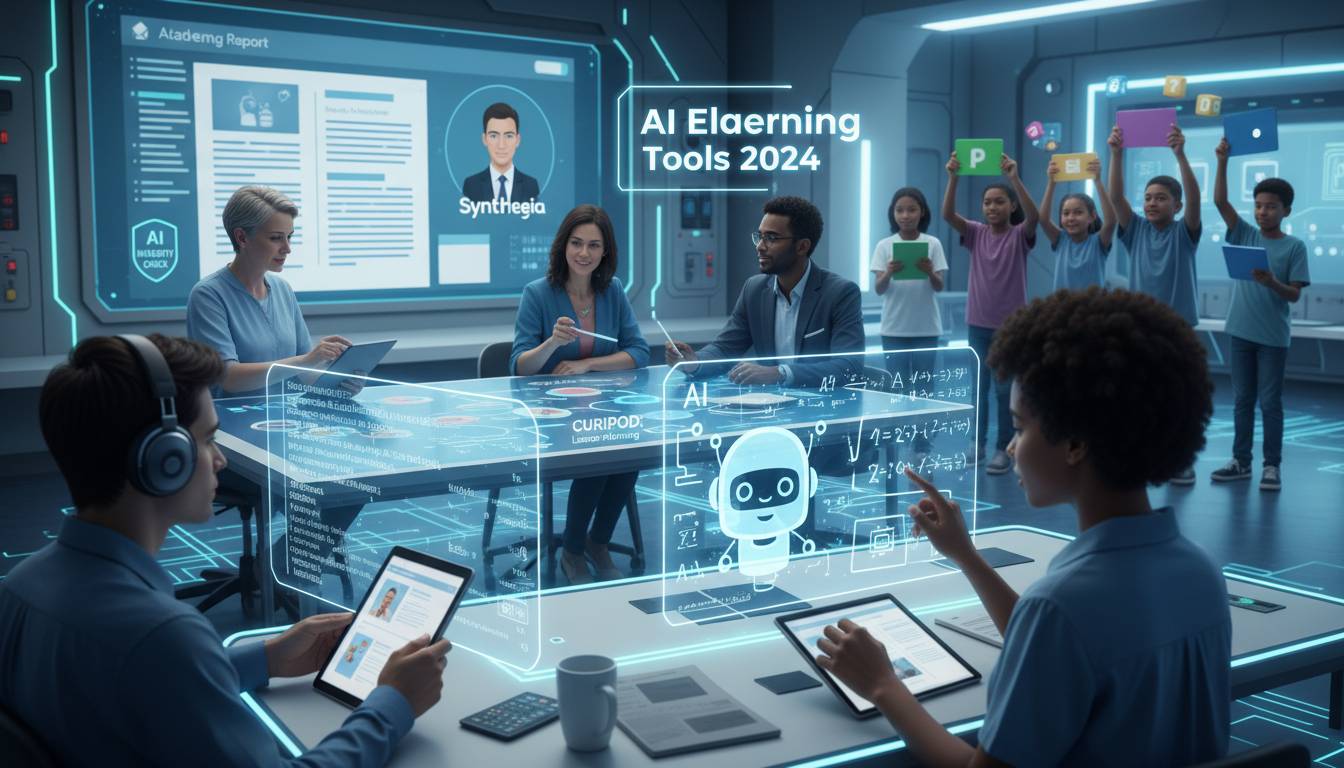
A remarkable shift is reshaping classrooms across the country: artificial intelligence has moved from theoretical possibility to practical necessity in education. In 2024, AI-powered eLearning tools have transcended experimental status, becoming integral components of educational ecosystems that deliver personalized learning experiences. From intelligent tutoring systems that adjust to individual learning rhythms to automated assessment platforms offering immediate feedback, these technologies address persistent challenges in educational accessibility and effectiveness. This analysis examines the most impactful AI eLearning tools currently available, their measurable effects on learners and educators, and emerging trends shaping digital learning’s future in the United States and globally.
The Evolution of AI in Digital Education
The integration of artificial intelligence into educational technology has accelerated significantly over recent years, propelled by advances in large language models and machine learning algorithms. According to a 2023 report published by the World Economic Forum, the global AI in education market is projected to reach $30 billion by 2027, with the United States representing the largest regional share of this growth.
The COVID-19 pandemic functioned as an unexpected accelerant for AI adoption in education, compelling institutions nationwide to implement digital learning solutions rapidly. Schools and universities that had previously shown reluctance toward new technologies suddenly explored AI-powered tools to sustain educational operations. This accelerated implementation exposed both the capabilities and constraints of existing solutions, driving substantial investment in more advanced platforms.
Contemporary AI eLearning tools represent the culmination of extensive research in adaptive learning, natural language processing, and educational data analytics. These technologies now power applications ranging from language learning platforms to advanced STEM education systems, serving millions of students globally. The most effective tools integrate multiple AI capabilities, creating comprehensive learning environments that can evaluate student comprehension, detect knowledge gaps, and deliver customized content dynamically.
Leading AI eLearning Platforms Transforming Learning Experiences
The market for AI-powered educational tools has expanded considerably, with several platforms emerging as leaders within specific educational domains. Understanding the capabilities and applications of these tools enables educators and learners to select solutions that align with their specific requirements.
Adaptive Learning Systems
Khan Academy’s Khanmigo represents one of the most ambitious implementations of AI in education. Launched in 2024, this intelligent tutoring system employs advanced language models to deliver personalized guidance across subjects including mathematics, science, and creative writing. The platform engages students in Socratic dialogue, prompting deeper thinking through questioning rather than direct answer provision. The design philosophy positions the tool as a complement to human instruction rather than a replacement, managing routine inquiries while enabling educators to concentrate on mentorship and complex concept development.
DreamBox Learning has established itself as a prominent platform for K-8 mathematics education, utilizing adaptive algorithms that continuously modify lesson complexity based on student performance. The platform analyzes problem-solving approaches, evaluating not merely answer correctness but also underlying reasoning. This detailed analysis enables DreamBox to present challenges calibrated to each learner’s optimal cognitive engagement level.
Language Learning and Literacy
Duolingo has incorporated sophisticated AI capabilities into its language learning platform, deploying machine learning to personalize review schedules and identify learning difficulties. According to the company’s 2023 annual report, over 500 million registered users worldwide engage with the platform, with AI-driven personalization contributing to improved completion rates compared to static curriculum approaches. The platform’s algorithms analyze patterns across millions of learning sessions to predict vocabulary retention vulnerability, scheduling review at optimal memory reinforcement intervals.
Newsela has transformed student engagement with current events by employing AI to modify reading complexity while preserving content meaning. Educators can assign identical news articles to students at varying reading levels, ensuring inclusive classroom discussions about current events regardless of individual reading proficiency. This approach has demonstrated particular value for English language learners and students with diverse literacy levels within shared classroom environments.
Assessment and Analytics
Turnitin’s AI detection capabilities have become essential for maintaining academic integrity within the evolving landscape of generative AI. The platform’s algorithms identify patterns characteristic of AI-generated content while also supporting educators in understanding how students utilize technology as a learning resource. This balanced approach recognizes that the relationship between human and AI-generated content is multifaceted and developing.
Pearson’s AI-powered assessment platform employs natural language processing to evaluate written responses with increasing sophistication. The system assesses not only factual accuracy but also argumentation quality, organizational structure, and writing style, delivering feedback that parallels human grading while maintaining consistency and immediate turnaround.
Impact on Educators, Students, and Institutions
The expansion of AI eLearning tools is fundamentally reshaping teacher responsibilities and student learning experiences across all educational levels. Examining these impacts helps stakeholders navigate both opportunities and challenges inherent in this technological transformation.
For educators, AI tools are automating time-intensive tasks that previously consumed substantial portions of their workday. Automated grading of objective assignments, generation of individualized learning plans, and identification of struggling students enable teachers to prioritize high-value activities including mentoring, lesson development, and relationship-building. According to Education Week Research Center’s 2023 survey of teachers using AI tools, 67% reported reduced time on administrative responsibilities, though respondents also noted concerns about the learning curve associated with new technologies.
Students benefit from AI-powered personalization adapted to their individual learning styles and paces. Research conducted by the Carnegie Learning Mathematics AI platform, published in peer-reviewed educational research, demonstrated that students utilizing AI tutoring components achieved 12% higher post-assessment scores compared to control groups receiving traditional instruction alone. These improvements were particularly significant for students who had previously experienced difficulties with mathematics, suggesting that AI tools may contribute to narrowing rather than widening achievement disparities.
Institutions face strategic decisions regarding tool selection and curriculum integration. Budget limitations, technology infrastructure demands, and faculty development requirements all influence implementation choices. Many districts are adopting phased approaches, piloting tools within specific grades or subjects before broader implementation. The International Society for Technology in Education has published implementation guidelines supporting schools navigating these decisions.
Addressing Concerns and Ethical Considerations
Despite the promise of AI in education, significant concerns persist regarding privacy, equity, and technology’s appropriate role in learning environments. Addressing these concerns is essential for sustainable adoption.
Data privacy remains a paramount concern, as AI educational tools frequently collect detailed information about student learning behaviors, performance patterns, and personal characteristics. The Children’s Online Privacy Protection Act establishes requirements for tools utilized by children under 13, though many educators and parents argue that existing regulations inadequately address the scope of data collection by contemporary AI platforms. Families increasingly seek transparency regarding data collection, storage practices, and access controls.
Equity considerations present additional challenges. While AI tools promise personalized learning for all students, access to high-quality AI-powered platforms remains uneven across socioeconomic contexts. Schools in well-resourced districts more frequently possess the infrastructure and budgets necessary for sophisticated AI tool implementation, potentially creating new disparities rather than eliminating existing ones. Furthermore, concerns have been raised regarding algorithmic bias that may affect tool accuracy for students from underrepresented demographic groups.
The question of appropriate human oversight also warrants attention. While AI can manage numerous routine educational tasks, educators emphasize that technology should complement rather than replace human judgment regarding student wellbeing, complex academic decisions, and social-emotional development. The most effective implementations position AI as a powerful resource supporting skilled educators rather than an autonomous substitute for human teachers.
Future Directions and Emerging Trends
The trajectory of AI in education points toward increasingly sophisticated capabilities and broader adoption across educational contexts. Several developments are likely to shape the landscape in coming years.
Multimodal AI systems capable of processing text, audio, video, and interactive content simultaneously are emerging as the next frontier. These systems will enable more natural learning interactions, allowing students to submit handwritten work, describe problems verbally, or engage with immersive educational content responding dynamically to their actions. Major technology companies are investing substantially in educational applications of multimodal AI, though questions remain regarding integration with established educational frameworks.
The integration of AI with virtual and augmented reality creates possibilities for experiential learning at scale. Chemistry students might conduct virtual experiments with AI-guided safety protocols, while history students could explore ancient civilizations through immersive simulations adapting to their interests and knowledge levels. While these applications remain largely developmental, preliminary pilots suggest significant potential for enhancing engagement and comprehension in subjects traditionally dependent on abstract representation.
Conclusion
AI eLearning tools in 2024 represent a pivotal moment in educational technology, offering capabilities that seemed implausible just years ago. From adaptive tutoring systems providing personalized guidance to sophisticated analytics supporting educator understanding of student needs, these tools are transforming knowledge delivery and acquisition. The most successful implementations position AI as a powerful complement to human educators rather than a replacement, managing routine tasks while preserving space for mentorship and relationship-building that remain fundamental to education.
As these technologies continue developing, stakeholders must thoughtfully address challenges of equity, privacy, and appropriate oversight. The objective should be ensuring that AI-powered education benefits all students, regardless of background or available resources. For educators, students, and institutions willing to engage thoughtfully with these tools, the potential for enhanced learning outcomes and expanded educational access has never been greater.
Frequently Asked Questions
What are the most effective AI eLearning tools currently available?
Effectiveness depends substantially on educational context, though leading platforms include Khan Academy’s Khanmigo for comprehensive tutoring, DreamBox Learning for K-8 mathematics, Duolingo for language learning, and Pearson’s AI-powered assessment tools. Each platform offers distinct strengths within specific educational domains.
Are AI eLearning tools suitable for all age groups?
AI tools exist for learners across all age groups, from early childhood applications to higher education platforms and professional development tools. Selection should prioritize age-appropriate tools aligned with developmental needs and learning objectives.
Do AI tools replace teachers?
No. The most effective AI tools are designed to complement teachers rather than replace them. They handle routine tasks like grading and provide personalized support, enabling educators to focus on mentorship, complex instruction, and social-emotional development requiring human judgment and connection.
How do schools protect student data when using AI tools?
Reputable AI education companies comply with FERPA and COPPA regulations, but schools should thoroughly review privacy policies, verify data storage meets security standards, and establish clear data handling protocols. The International Society for Technology in Education provides guidelines for evaluating AI tool privacy practices.
What evidence supports the effectiveness of AI in education?
Research from organizations including Carnegie Learning’s Math AI project and peer-reviewed studies demonstrate measurable improvements in learning outcomes when AI tools are implemented appropriately. However, effectiveness varies based on implementation quality and contextual factors.
How much do AI eLearning tools cost?
Pricing varies considerably, ranging from free versions of tools like Khan Academy and Duolingo to enterprise solutions costing thousands of dollars annually. Many companies offer discounted or complimentary access for schools in low-income districts, and some state education departments have negotiated collective licensing agreements.
The post Best AI eLearning Tools 2024 for Interactive Learning appeared first on boostelearning.