

 March 12, 2026
  7 Min
7 Min  No Comment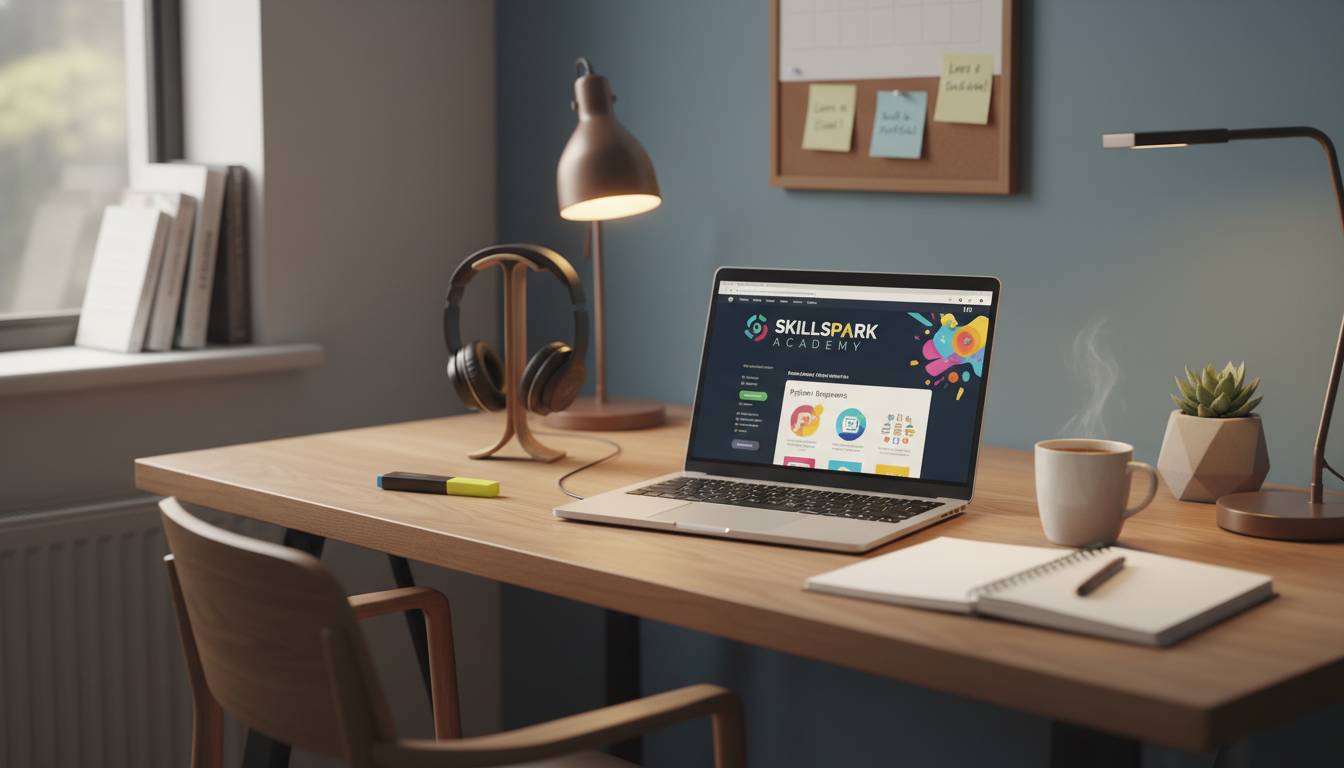
The world of education has changed a lot in the last ten years. Online learning went from a niche experiment to something millions of people do every day. Whether you want to pick up new job skills, learn something interesting, or work toward a full degree, learning online gives you options that didn’t exist before. This guide covers what actually works so you can get started without wasting time.
Choosing Your Learning Goal
Before you sign up for anything, you need to know what you’re trying to accomplish. Sounds obvious, but most people skip this step and then wonder why they lose interest.
Figure out what you actually want. Think about your interests, what kind of job you want (or have), and what skills you’re missing. Ask yourself what knowledge would actually help you in life or work. People usually learn online for tech skills, business, creative work, languages, or health and fitness. A 2023 report from the Online Learning Consortium found that about 75 percent of people who finish online courses see career progress within two years.
Think about how much time you can actually commit. Some things you can learn in a few weeks. Others take months or years. Be honest about what you have available so you don’t burn out halfway through. Write down what you want to learn, why it matters to you, and how you’ll use it. Keep it simple.
Selecting the Right Platform
There’s a ton of platforms out there, and they all do things differently. Knowing what each one offers helps you pick something that fits your goals and your wallet.
Coursera works with universities and companies to offer courses, certificates, and degrees. It’s strong on academic subjects and career credentials, and they have financial aid if you need it. Udemy has over 200,000 courses from independent instructors, so it’s good for practical skills in just about anything. edX started at Harvard and MIT and offers college-level courses—you can audit most for free, but you pay for certificates.
If you want a full degree online, schools like Arizona State, Penn State, and Southern New Hampshire University have fully online programs. LinkedIn Learning focuses on business and tech skills. Skillshare is better for creative stuff—design, photography, writing.
When you’re picking a platform, think about course quality, who teaches them, what other students say, whether you get a certificate, and how much it costs. Lots of platforms let you try free courses or buy single classes cheap before you commit to anything expensive.
Setting Up Your Learning Environment
Your environment matters more than people think. Good setup means less frustration and better retention.
You need a computer or tablet that works reliably, with steady internet. You don’t need the newest machine, but you don’t want it crashing in the middle of a lesson. Pick a specific spot to study—a corner of your room, a desk, even the library. Your brain starts to recognize that space as “study time.”
Keep your digital stuff organized too. Make folders for your courses, notes, and assignments. Apps like Evernote, OneNote, or Notion help keep everything in one place. If you’re in a noisy environment, get decent headphones. Good lighting saves your eyes during long sessions. And get a chair that doesn’t hurt your back—bad posture makes everything harder.
Creating a Learning Plan
Online learning doesn’t have the built-in structure of a classroom, so you have to create your own.
Look at your schedule and find time slots you can use consistently. Block them off and treat them like appointments you can’t miss. Research from UC Irvine shows that consistent routines reduce decision fatigue and help you remember more over time.
Break your big goal into smaller chunks. Don’t say “learn programming.” Say “finish three modules in four weeks.” This gives you real targets and the satisfaction of checking them off. Use habit trackers, calendars, or even a notebook to see where you stand.
Build in some flexibility. Life happens—something will come up and you’ll miss a study session. That’s fine. Just don’t let one missed day wreck your whole plan.
Staying Motivated While Learning Online
This is where most people struggle. No teacher checking if you showed up, no classmates to study with. You have to push yourself.
Find ways to hold yourself accountable. Study partners, online groups, forums for your subject—these create outside pressure that helps. Most platforms have discussion areas where you can meet other people working on the same stuff. Tell your friends or family what you’re doing so they can check in on you.
Give yourself credit for small wins. Finished a hard module? Did well on a quiz? Finished a project? That’s worth celebrating. These moments remind you why you started and give you energy to keep going.
Problems will come up—technical issues, confusing material, life getting in the way. That’s normal. Don’t treat them as reasons to quit. Most platforms have help resources, and course forums usually have answers from other students who’ve dealt with the same stuff.
Measuring Your Progress
Checking how you’re doing tells you what’s working and what needs more attention.
Most courses have quizzes, projects, or exams. Take them seriously. The results show you what you understand and what you need to review. If something’s hard, go back and look at it again—even if you’ve already moved on to the next part.
Build a portfolio of your work. Save code samples, show off design projects, keep writing samples—whatever your field is. These concrete examples prove what you can do, and they often matter more than credentials alone.
Consider getting certifications that prove you know your stuff. Google, AWS, and Microsoft have certifications that carry weight in lots of jobs. Academic certificates from accredited schools show you completed a real program.
Frequently Asked Questions
Is online learning as effective as traditional classroom education?
Research shows that well-designed online learning works about as well as in-person classes. A study in the journal Distance Education found similar outcomes between online and traditional settings when course quality and teaching were the same. What matters most is how the course is built, how motivated you are, and how much you engage with the material.
How long does it typically take to learn a new skill online?
It depends on the skill and your background. Simple topics might take a few hours over a few days. Advanced professional skills might take several months of regular study. Most beginner courses run four to twelve weeks if you’re studying a few hours per week.
What are the best online learning platforms for beginners?
It depends on what you want. Coursera and edX have university-level courses, Udemy is cheap and covers practically everything, and LinkedIn Learning targets business pros. Khan Academy is solid for free academic basics.
Can I learn online for free?
Yes. Coursera, edX, and Khan Academy all have free courses—you just pay if you want a certificate. Lots of universities share free course materials, and YouTube has educational content on almost any topic.
How do I stay focused when learning online without external accountability?
Make a consistent schedule, set up a specific workspace, remove distractions, and use productivity apps. Set clear, measurable goals and track your progress. Join online learning communities for social accountability.
Are online certificates and degrees recognized by employers?
It varies by field and school, but credentials from accredited institutions are increasingly respected. A 2023 survey by Wiley Education Services found that 82 percent of hiring managers see online credentials as equal to traditional ones when they come from accredited schools.
Conclusion
Online learning is a real opportunity to grow professionally and personally. The secret is treating it seriously—define your goals, pick good platforms, set up a routine, and keep going even when it’s hard. Start small, be patient with yourself, and remember that showing up consistently matters more than everything else at once. The tools are out there. Now you just have to use them.