

 March 8, 2026
  10 Min
  No Comment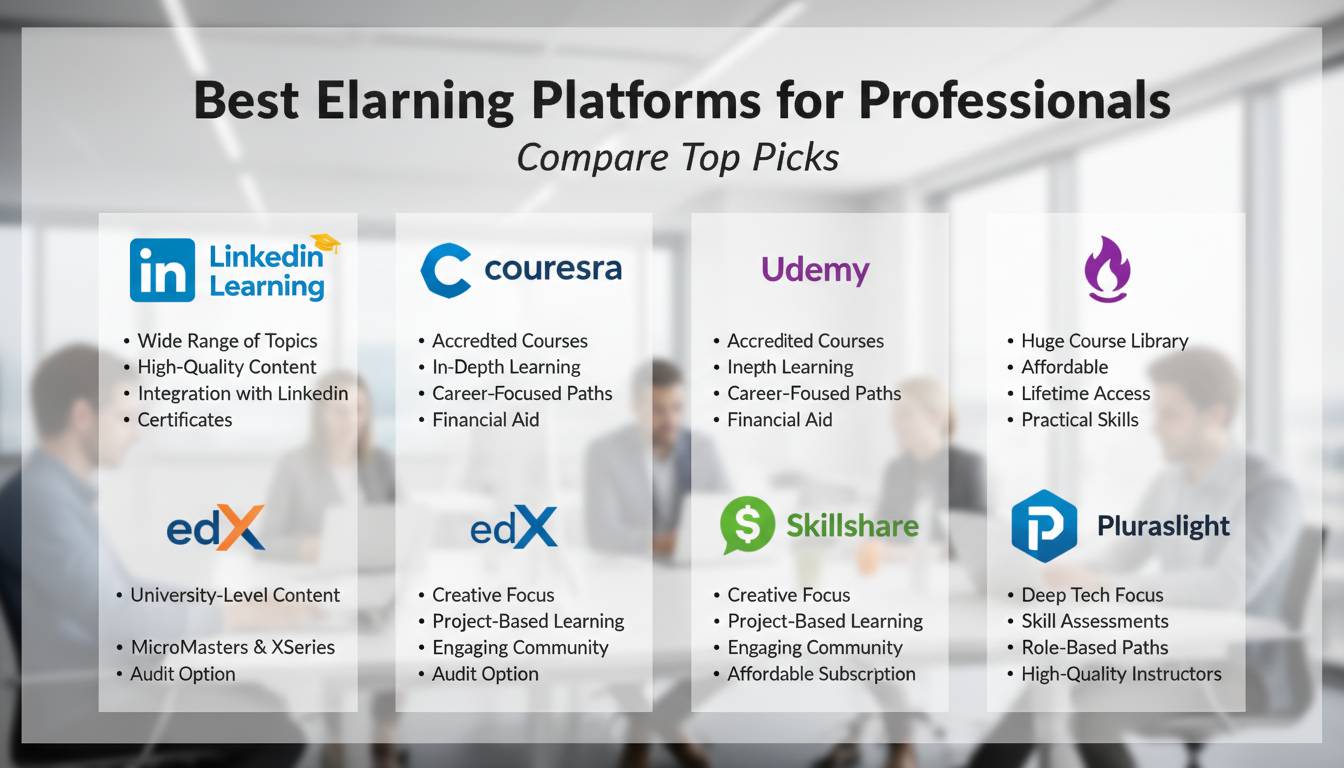
The professional development landscape has shifted dramatically. ELearning platforms have become essential for career growth, and organizations increasingly prioritize continuous learning to retain top talent. Whether you need technical certifications, leadership training, or industry-specific credentials, these platforms offer flexible ways to build skills without leaving your current position. This guide examines the leading eLearning platforms based on course quality, certification value, and career impact.
Understanding Professional eLearning Needs
Professionals have different needs than casual learners. Time is limited. Career goals are specific. Credentials matter. The best platforms for professional development offer industry-relevant courses, recognized certifications, and tools that connect to measurable career advancement.
Companies investing in employee learning see documented returns. Research from the Association for Talent Development indicates that organizations with comprehensive training programs experience employee retention rates approximately 53% higher than those without structured learning initiatives. This connection between development investment and organizational outcomes has driven substantial growth in corporate eLearning—the global market reached approximately $385 billion in 2023 and continues expanding.
The top platforms serve multiple learning goals simultaneously. They handle technical skill development for technology roles, soft skills for leadership positions, and certifications that signal expertise to hiring managers. Beyond content quality, professionals need practical flexibility: scheduling that accommodates work demands, mobile access for learning during commutes or travel, and credentials that translate to promotions or new opportunities.
Top eLearning Platforms for Professional Development
Coursera
Coursera partners with over 300 universities and organizations to deliver university-level courses. The platform hosts more than 7,000 courses covering business, technology, data science, and personal development. Professionals can take individual courses, pursue professional certificates, or enroll in full degree programs.
Pricing ranges from free audit options to $399 for professional certificates, with degree programs varying by institution. The primary value comes from university partnerships—professionals can earn credentials from Stanford, Yale, and Imperial College London. Enterprise solutions include organizational learning management with dedicated support teams.
Coursera reported approximately 77 million learners globally as of 2024, with significant growth in professional certificate programs. LinkedIn integration allows users to display credentials directly on their profiles, supporting job searches and professional visibility. Recent additions include AI-focused courses and generative AI skills, responding to market demand from working professionals.
LinkedIn Learning
LinkedIn Learning leverages the professional network’s user base to deliver career-focused courses. The platform offers over 16,000 courses from industry practitioners in business, creative, and technology skills. Access comes through LinkedIn Premium or as a standalone subscription at approximately $29.99 per month.
The integration with LinkedIn’s ecosystem provides distinct advantages. Course completions appear directly on user profiles, signaling verified skills to recruiters and hiring managers. The recommendation engine suggests courses based on career goals and industry trends, creating personalized learning paths aligned with professional development.
For organizations, LinkedIn Learning provides enterprise tools including learning analytics, administrative controls, and connections to existing HR systems. According to LinkedIn’s Workplace Learning Report, organizations with strong learning cultures report 57% higher employee retention rates—data that supports the business case for organizational learning investments.
Skillshare
Skillshare focuses on creative and practical professional skills with over 35,000 classes. The service emphasizes project-based learning in design, business, photography, and technology. Subscriptions cost approximately $13.99 monthly or $167.99 annually.
The community features differentiate Skillshare from competitors. Students share projects, receive feedback from peers, and interact with instructors through class discussions. This collaborative approach appeals to professionals building portfolios or exploring creative career transitions. The platform reports millions of members, with strong adoption among creative professionals and small business owners seeking practical skill development.
Corporate clients include teams from various organizations looking for creative skill development. The emphasis on practical application over traditional credentials attracts professionals who want immediate workplace value rather than formal certifications.
Udemy Business
Udemy Business provides access to Udemy’s broader marketplace of over 200,000 video courses, offering substantial variety for organizations. The platform serves enterprise clients with curated learning paths, analytics dashboards, and administrative features. Pricing depends on organization size and required features, typically ranging from $15 to $30 per user monthly.
Course quality varies on the platform because instructors are not vetted before publishing. The rating system and user reviews help identify high-quality content. Popular professional categories include project management, data science, leadership, and digital marketing.
Udemy’s strength lies in breadth and depth of content. Organizations seeking specific technical skills or niche topics often find relevant courses. The ability to upload internal training content adds significant value for companies developing proprietary educational materials.
Pluralsight
Pluralsight concentrates on technology and IT professional development, covering software development, IT operations, data science, and cybersecurity. Skill assessment tools help professionals identify knowledge gaps and recommend targeted learning paths. Individual subscriptions cost approximately $29 monthly, with enterprise plans including additional features like team analytics and role-based learning paths.
The technology focus makes Pluralsight valuable for IT professionals needing to maintain current knowledge in rapidly evolving fields. Course content ranges from entry-level certifications to advanced technical architecture. The platform reports serving numerous Fortune 500 companies, demonstrating enterprise adoption.
Recent investments in hands-on learning environments allow professionals to practice skills in simulated settings rather than passively watching videos. This approach addresses common criticisms about passive learning and supports improved skill retention for technical competencies.
edX
Harvard and MIT founded edX to provide university-level courses and professional credentials from leading academic institutions. The platform offers free audit options, with verified certificates starting at $99 and professional certificates ranging from $300 to $1,500.
The academic foundation differentiates edX from commercial platforms. Professionals seeking rigorous, comprehensive education value courses designed for university credit or professional certification. Partner institutions include MIT, Harvard, Berkeley, and over 160 universities worldwide.
MicroMasters programs offer graduate-level coursework that can count toward full degrees, appealing to professionals interested in advanced education without full-time enrollment. The emphasis on academic rigor attracts professionals in regulated industries that require documented expertise and verifiable credentials.
MasterClass
MasterClass takes a distinctive approach to professional development—celebrity instructors and high production values. Classes in leadership, communication, negotiation, and creative direction feature instructors recognized as leaders in their respective fields. Annual subscriptions cost approximately $180 for unlimited access to all courses.
The entertainment value and instructor prestige appeal to professionals seeking accessible, engaging development content. MasterClass does not provide traditional certifications. Instead, it delivers foundational knowledge and perspectives from accomplished practitioners. Most courses run 2 to 5 hours, fitting into demanding professional schedules.
Critics note the lack of hands-on practice and credentials. However, MasterClass serves professionals seeking breadth of knowledge and inspiration rather than technical certification. Corporate packages include team learning features for organizations wanting to provide inspirational content to employees.
Choosing the Right Platform for Your Career Goals
Selecting the best eLearning platform requires evaluating career objectives, learning preferences, and realistic time commitments. Several factors should guide your decision-making process.
Career alignment matters most when choosing a platform. Technical professionals may benefit most from Pluralsight or Coursera’s technology courses. Those seeking general business skills often find LinkedIn Learning more suitable. Creative professionals typically discover that Skillshare and MasterClass better address their development needs.
Certification value differs significantly across platforms. If you need recognized credentials, prioritize platforms offering industry-standard certifications or university-affiliated programs. If skills development matters more than credentials, less formal platforms feel more approachable and flexible.
Time availability affects which platform makes practical sense. For minimal time investment, shorter courses on MasterClass work well. For comprehensive education, degree programs on Coursera or edX provide greater depth. Unlimited subscriptions suit professionals planning significant ongoing learning.
Budget extends beyond monthly fees. Some platforms offer free content; premium credentials cost substantially more. Calculate total costs including certification fees when comparing options to understand true investment requirements.
The Future of Professional eLearning
Professional eLearning continues evolving with new technologies and changing workplace dynamics. AI integration promises personalized learning experiences, adaptive difficulty adjustments, and automated feedback on assignments. Virtual and augmented reality create immersive training environments for developing hands-on skills in simulated contexts.
Organizations increasingly hire based on demonstrated skills rather than degrees alone, driving demand for platforms that verify practical competency. Micro-credentials and digital badges document specific skills more granularly than traditional degrees. The shift toward continuous learning as a career requirement ensures steady growth in professional eLearning adoption across industries.
Remote and hybrid work arrangements have accelerated platform adoption. Professionals need flexible learning options that accommodate distributed schedules and varying time zones. Mobile design and offline access have become standard expectations rather than premium features.
Conclusion
The best eLearning platforms for professionals offer different strengths suited to various career stages, industries, and goals. Coursera leads in academic rigor and university credentials. LinkedIn Learning integrates seamlessly with professional networks. Skillshare excels in creative skill development. Udemy Business provides unmatched course variety. Pluralsight serves technology professionals with depth. edX maintains academic prestige. MasterClass delivers premium inspirational content.
Successful professional development requires choosing platforms that align with specific career goals, preferred learning styles, and realistic time commitments. The investment in continuous learning pays returns through career advancement, relevant skills, and professional credibility. As workplace dynamics continue changing, eLearning platforms will remain essential for professionals committed to career growth.
Frequently Asked Questions
Which eLearning platform is best for career advancement?
LinkedIn Learning and Coursera both offer strong career advancement features. LinkedIn Learning integrates directly with professional profiles, allowing employers to verify skills through the platform’s endorsement system. Coursera provides recognized professional certificates and degree programs from top universities, signaling professional commitment to recruiters and hiring managers.
Are online professional certificates worth the investment?
Many learners report measurable returns from professional certificates depending on their career field and goals. According to Coursera’s learner outcomes research, a significant percentage of certificate completers report career benefits within six months—including promotions, new job opportunities, or successful application of new skills in their current roles. Individual results vary based on industry, existing experience, and how the credential aligns with career objectives.
How much should professionals spend on eLearning platforms monthly?
Professional eLearning subscriptions typically range from free to $50 monthly depending on chosen platforms and subscription tiers. Free options include limited audits and course access. Premium subscriptions cost $15 to $30 monthly for comprehensive access. Professionals committed to ongoing learning save 30% to 50% with annual subscription plans.
Can eLearning replace traditional professional degrees?
For many careers, eLearning provides sufficient skill development without requiring traditional degrees. Technology, creative, and business fields increasingly value demonstrated skills and certifications over formal education credentials. However, regulated professions requiring professional licenses may still mandate traditional educational credentials alongside ongoing professional development.
How do employers view eLearning certifications?
Employer perspectives on eLearning certifications vary by industry and credential type. Certificates from recognized universities and established platforms carry significant weight in hiring decisions. Industry-specific certifications demonstrate specialized expertise valued in technical fields. Employers increasingly prioritize continuous learning demonstrated through recent course completions, regardless of credential format.
What is the most cost-effective eLearning platform for professionals?
Udemy Business provides extensive course variety at competitive pricing for organizations. Coursera’s free audit options give access to university-level content without certification costs. For professionals committed to heavy learning, annual subscriptions to Skillshare or LinkedIn Learning offer unlimited access at reasonable rates, typically $150 to $200 yearly.