

 March 7, 2026
  9 Min
9 Min  No Comment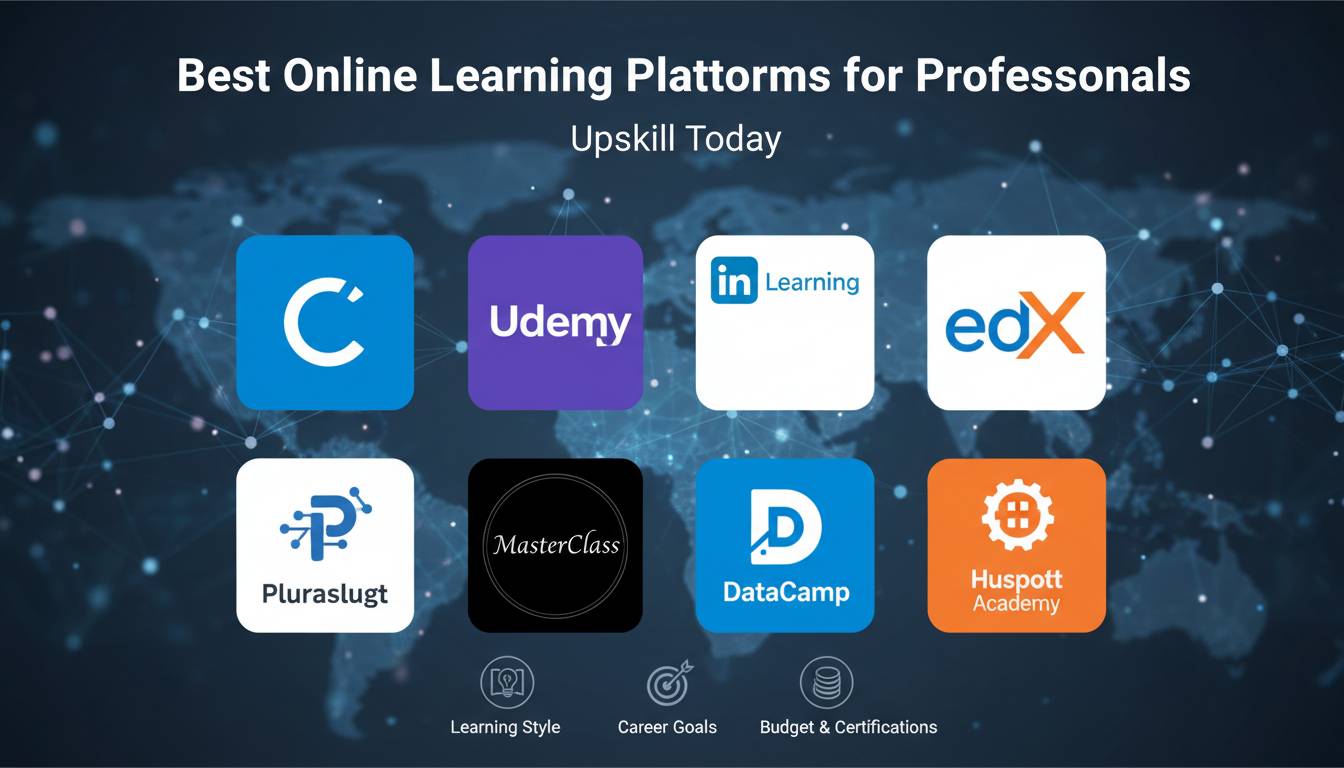
The workplace has transformed. Remote work is now standard practice, technology evolves rapidly, and professionals who stop learning quickly find themselves at a disadvantage. This shift has driven explosive growth in online education—the global e-learning market is projected to reach $375 billion by 2026, according to Statista’s market outlook. For those looking to break into tech, strengthen leadership capabilities, or master new creative tools, the right platform can meaningfully accelerate career progression. This guide evaluates the top US options based on actual platform features, pricing transparency, and career applicability.
How We Evaluated These Platforms
Our assessment considered factors that directly impact your learning investment. Course quality received priority—examining curriculum structure, instructor credentials, and evidence of learning outcomes. Pricing transparency mattered: hidden fees and confusing subscription tiers frustrate learners. We evaluated career relevance: whether credentials carry weight with employers and whether platforms offer pathways to actual job opportunities. Flexibility ranked high—mobile accessibility, self-paced options, and compatibility with full-time work schedules. Finally, we considered user experience: platform navigability and available support when issues arise.
Coursera — Best Overall for Academic Rigor
Coursera has established itself as the leading platform for professionals seeking university-backed credentials without full-time enrollment. The platform partners with over 200 universities and corporations, including Yale, Stanford, and Google, to deliver courses carrying genuine academic authority.
The pricing structure offers three tiers. Individual courses are free to audit; verified certificates cost $39 to $100. Professional certificates designed for career changers typically run $39 to $79 per month with guided projects. Full online degree programs in data science, business, and computer science range from $15,000 to $45,000 total—substantially less than traditional programs while delivering equivalent curriculum.
Coursera’s Career Certificate program, developed alongside Google, IBM, and Meta, distinguishes the platform. These programs require approximately six months of part-time study and prepare learners for project management, UX design, and data analytics roles. Coursera’s 2023 Impact Report indicates that 76% of learners reported positive career outcomes within six months, with 38% attributing salary increases to their credentials. These figures represent self-reported data, so interpreting them alongside other factors makes sense.
LinkedIn Learning — Best for Career Integration
LinkedIn Learning integrates directly with the world’s largest professional network. With over 930 million members worldwide, completed courses display prominently on profiles where recruiters actively search for candidates—a tangible advantage for job seekers.
The platform hosts thousands of courses spanning business, technology, and creative skills, with new content added regularly. Instructors come from major corporations and creative industries, offering practical knowledge rather than purely theoretical instruction.
At $29.99 per month or $239.88 annually, pricing remains competitive. LinkedIn’s job search integration allows learners to identify in-demand skills and align their education accordingly. Enterprise plans offer organizations custom learning paths and analytics tracking team progress.
LinkedIn Learning Certificates add verifiable credentials directly to profiles. Research from LinkedIn’s Talent Solutions indicates that the platform influences recruiter decisions for a significant portion of hiring—making visible credentials increasingly valuable for career advancement.
edX — Best for University Credentials
Harvard and MIT established edX in 2012, and it remains the premier destination for prestigious online credentials. The platform offers courses from over 160 institutions, including MIT, Harvard, Boston University, and Columbia.
MicroMasters programs represent particularly valuable offerings. These graduate-level certificates cost between $1,000 and $3,000 and comprise four to five courses. A key advantage: credits can transfer toward full master’s degrees at participating universities. For professionals wanting credentials without full degree commitment, this structure provides an ideal middle ground.
Professional Certificate programs, developed with IBM, Microsoft, and AWS, deliver targeted skills for specific career paths. Programs typically cost $300 to $600 and require three to six months. The distinction between edX and commercial-only platforms lies in institutional backing—employers consistently recognize and value university-affiliated credentials.
MasterTrack certificates, offering graduate-level coursework from Wharton, MIT Sloan, and Columbia Business School, provide maximum credibility. These programs cost $5,000 to $15,000 and immediately signal professional competence while serving as pathways to complete degrees.
Skillshare — Best for Creative Professionals
Skillshare serves creative professionals and those developing design, illustration, photography, or video production skills. The subscription model at $13.99 per month or $167.88 annually provides unlimited access to thousands of classes. For learners exploring multiple creative disciplines, this offers substantial value.
The project-based approach differentiates Skillshare. Rather than passive video consumption, learners complete hands-on projects building portfolios suitable for showcasing to clients or employers. Community features enable peer feedback, simulating a traditional creative classroom environment.
Business-oriented classes covering freelancing, entrepreneurship, and marketing have expanded the platform’s utility for independent practitioners. Team plans at $240 annually serve marketing teams and design agencies seeking employee development options.
Recent updates include enhanced analytics for Premium members and Skillshare Studios, offering curated learning pathways for specific creative career outcomes.
Udemy Business — Best for Enterprise Scale
Udemy Business exists primarily to help organizations train large workforces efficiently. With one of the largest course libraries available, the platform covers technical skills, leadership, and business topics suitable for enterprise deployment.
Pricing reflects the B2B focus. Enterprise plans start at $399 per year for up to five users, with volume discounts for larger organizations. Organizations upskilling hundreds or thousands of employees across departments find this structure economical.
The global instructor marketplace ensures courses remain current—new software versions, regulatory changes, and emerging methodologies appear quickly. A trade-off exists: quality varies more than on platforms employing stricter instructor curation.
Integration with major learning management systems allows organizations to deploy Udemy content within existing training infrastructure. Admin dashboards display completion rates, skill gaps, and ROI metrics, supporting investment justification to leadership.
Pluralsight — Best for Technology Professionals
Pluralsight focuses specifically on IT and software development skills. Role-based learning paths align with technical job functions—cloud architect, cybersecurity specialist—so curriculum directly supports career advancement in technology fields.
The Skills assessment feature identifies knowledge gaps and recommends personalized learning paths, addressing a genuine need for busy IT professionals. Subscriptions at $29 per month or $299 annually include access to thousands of courses plus cloud sandboxes enabling hands-on practice without local installation.
Partnerships with Microsoft, AWS, Google Cloud, and Cisco ensure courses prepare learners for official certification exams. For organizations, Pluralsight Flow provides workforce intelligence helping tech managers identify skill gaps and allocate learning resources effectively.
Certification preparation includes practice exams and hands-on labs. The platform reports that learners completing certification paths demonstrate improved exam pass rates—though independent verification of these claims would strengthen the assertion.
MasterClass — Best for Leadership and Business Strategy
MasterClass occupies a distinct niche. The platform serves professionals developing strategic thinking and leadership capabilities through instruction by accomplished practitioners. The format features high-production video lessons offering an engaging alternative to typical courseware.
Instructors include Condoleezza Rice on leadership, Marc Benioff on entrepreneurship, and Oprah Winfrey on purposeful leadership. Learners access perspectives rarely available through traditional executive education programs.
At $15 per month or $180 annually, accessibility is strong. Annual subscriptions include all courses, allowing exploration of negotiation, financial literacy, and other leadership topics without additional charges.
MasterClass does not excel at technical courses—nor does it attempt to. The platform’s strength lies in soft skills and strategic thinking development, capabilities growing increasingly valuable in leadership positions.
Comparison of Key Features
Platform differentiation becomes clear when examining core strengths. Coursera and edX lead on academic credentials and degree pathways—optimal for career changers or those seeking formal qualifications. LinkedIn Learning excels in professional network integration and career-focused skill development. Skillshare delivers the best value for creative professionals exploring multiple disciplines. Udemy Business offers the most extensive library for organizations requiring diverse training content. Pluralsight provides the most targeted technical skill development with integrated assessment tools. MasterClass offers superior production quality for leadership and strategic skill development.
Conclusion
Platform selection depends on individual goals, budget constraints, and preferred learning formats. Career changers and those seeking academic credentials benefit most from Coursera or edX—university partnerships carry substantial weight with employers. Technology professionals find Pluralsight’s role-based approach efficient for targeted skill development. Creative professionals should evaluate Skillshare’s project-based model and community features. Organizations training large teams should consider Udemy Business for library breadth and LMS integration.
Professional development consistently yields returns for those committed to continuous learning. The most accomplished professionals treat skill development as ongoing rather than one-time investment. Select a platform matching your circumstances, maintain consistent engagement, and results will follow.
Frequently Asked Questions
Which online learning platform is best for career advancement?
Coursera and LinkedIn Learning both perform well for career-focused learners. Coursera’s career certificates include employer partnerships potentially leading directly to employment opportunities. LinkedIn Learning credentials appear on profiles where recruiters actively search. Selection depends on whether formal credentials or searchable professional profiles better serve your career strategy.
How much do professional online courses cost in 2024?
Costs vary significantly. Individual courses range from free to approximately $100. Monthly subscriptions typically cost $15 to $30. Professional certificates range from $300 to $3,000. Full online degrees range from $10,000 to $45,000—still less than traditional program costs.
Are online certificates valued by employers?
Employer recognition continues growing. Certificates from established platforms with industry partnerships demonstrate initiative and specific skill acquisition. They function best alongside practical experience rather than as standalone qualifications.
What is the difference between Coursera and edX?
Both deliver university-backed courses with comparable quality. Coursera offers more career certificate programs developed with employers like Google and IBM. edX maintains stronger academic ties with expanded degree program options and MicroMasters pathways. Choose based on whether employer-aligned credentials or traditional degree pathways better match your objectives.
Is LinkedIn Learning worth it for professionals?
At approximately $240 annually, LinkedIn Learning delivers strong value—especially for existing LinkedIn users. Integration means completed courses appear on profiles visible to recruiters. The library covers practical business, technology, and creative skills. For professionals leveraging LinkedIn as a career tool, the learning component adds measurable value.
Can I get a job with certificates from online learning platforms?
Certificates alone rarely secure employment, but they contribute meaningfully. Coursera reports most learners see positive career outcomes within six months—though that data is self-reported. Certificates primarily demonstrate initiative and growth commitment, qualities employers value in competitive job markets.