

 February 14, 2026
  7 Min
7 Min  No Comment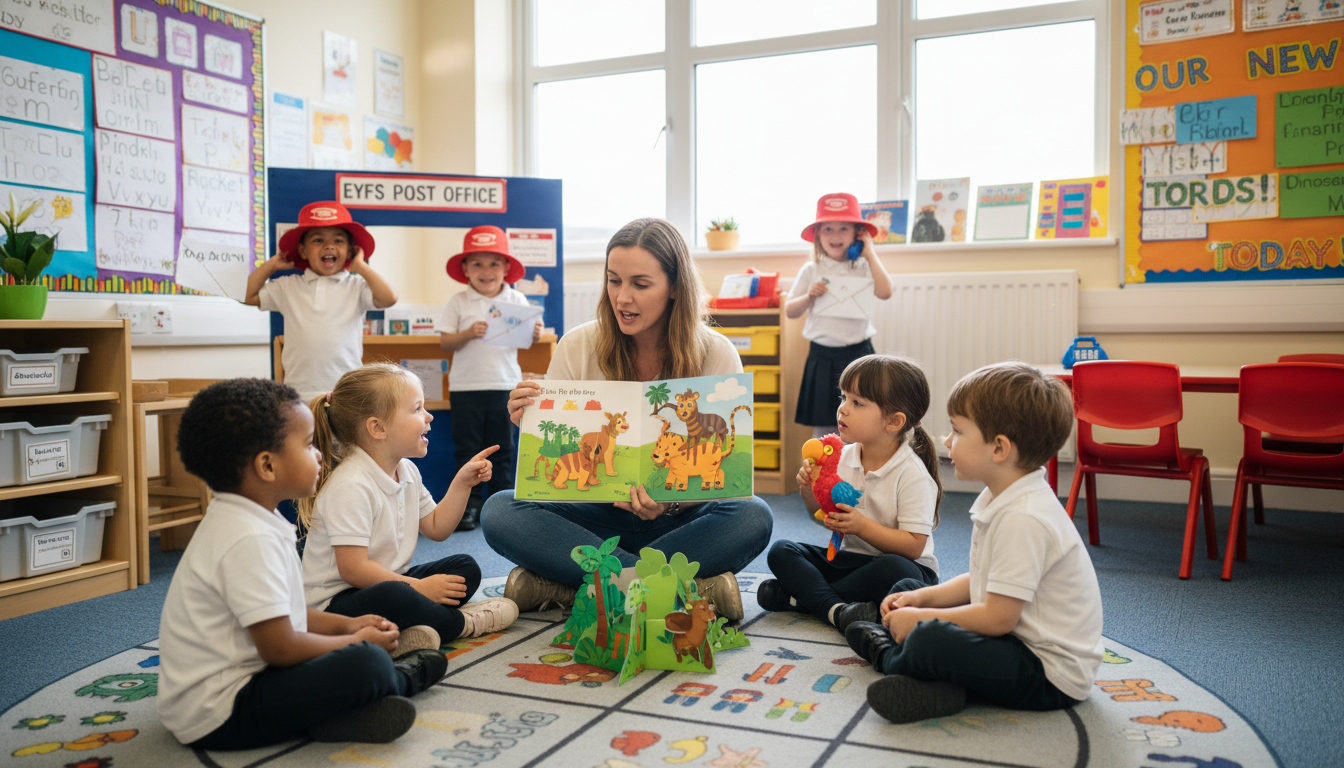
Early childhood development isn’t, honestly, a neat linear journey. It’s full of giggles, tantrums, messy paint and yes, unexpected leaps in learning. The framework known as the 7 Areas of Learning in the Early Years Foundation Stage (EYFS) doesn’t pretend to have it all figured out—but it offers a solid, familiar guide. That said, human unpredictability creeps in (thanks, toddlers!), and this very structure helps caregivers, educators, and researchers hold onto something steady. We’ll walk through each of these foundational areas, sprinkling in real-world examples, a dash of data, and an unexpected twist or two—because if there’s one thing small learners teach us, it’s to expect the unexpected.
Understanding the 7 Areas: A Snapshot of Learning Domains
These areas broadly cover how children develop and learn from birth to five years old. There’s a sense that they interlink—like branches of a tree, not isolated islands. Often, educators might emphasize one area but find it actually blooms when others are in play, too.
1. Communication and Language: More Than Just Words
Language development often seems like magic—one day your child’s cooing, and maybe weeks later you get a clear “stop!” It starts with listening and attention, then speaking, and eventually understanding.
In practice, many toddlers pick up new phrases by mimicking a TV character or repeating overheard conversation—funny and a little scary, right? This area lays the groundwork for all future learning, especially literacy. Structurally, it includes:
- Listening attentively in small and larger groups
- Understanding meaning in stories
- Expressing ideas through words, gestures, even dance
Beyond that, practical examples include finger plays (“Twinkle Twinkle Little Star”), shared reading, even casual chatter at snack time. These casual moments often spark the richest linguistic growth.
2. Physical Development: More Than Gross Motor Skills
We usually think physical development = running and jumping, but it’s also about fine motor control, like sharpening pencils or threading beads. There’s plenty of developmental research showing that these early skills support concentration and later, writing.
Real-life context: a kindergartner may begin life unable to unzip a jacket independently, but by halfway through the year they’re not just managing jackets—they can sketch recognizable animals. That’s the daily miracle of fine motor maturity.
3. Personal, Social and Emotional Development: The Soft Power
Here’s where the “real world” enters: children learn to manage feelings, make friends, deal with disappointments. Stories abound—like that shy child who eventually asked to be first in line, or another who learned to postpone crying when it wasn’t their turn.
On a higher level, experts stress how PSED underpins mental health and resilience. In modern discourse, this is often described as “soft power” or non-cognitive skills—vital in increasingly complex social environments.
4. Literacy: More Than ABCs
Literacy here doesn’t just mean letter recognition; it includes enjoying and understanding stories, rhymes, and mark-making. There’s a spectrum—some children scribble “letters,” others start inventing words to narrate their pictures.
This area morphs with exposure. A home filled with books, read-aloud rituals, or even a curious shopping-list scribble can foster interest. A child who nibbles on a book’s corner isn’t just exploring with mouth—it’s a step toward exploring narrative, texture, story context.
5. Mathematics: Playful Number Sense
Math isn’t only counting—it’s shape awareness, pattern recognition, spatial reasoning. A play dough session becomes geometry 101 when a toddler compares discs and cylinders; sandpit patterns hint at early algebra-like thinking.
Practical moment: stacking blocks can lead to weight understanding, balance, comparison language (“bigger, heavier”), and that’s before terms like “triangular prism” enter anything like a preschooler’s vocabulary! This whimsical approach grounds serious mathematical thinking in play.
6. Understanding the World: Curiosity Meets Context
This area spans from science to history, communities to cultures. It could be as simple as planting seeds and watching what happens—or noticing that carrots used to be different colors. Essentially, kids trace the cause and effect all around them.
A snippet from a classroom: one child asks why the sky is blue, another wonders if the moon follows them home. Teachers lean into these moments by letting questions guide investigations—water play for physics, observations of insects for biology. Curiosity drives learning more than facts ever could.
7. Expressive Arts and Design: When Imagination Speaks
Creativity, music, role-play—these let children explore ideas and emotions beyond words. Singing—even off-key—but deliberate. Messy painting, spontaneous dance, fashioning cardboard into pirate hats. It’s full of glorious unpredictability.
There’s growing attention to how expressive arts also support cognitive flexibility. Solving “how to make the wings stick” in a costume is essentially engineering. So, the lines blur—but human unpredictability is at the core.
“Learning is most powerful when children can explore, question, imagine—and mess up along the way.”
This perspective, often voiced by early years educators, reminds us that part of development’s grace lies in trial and error, creative restlessness, and above all, the freedom to explore.
Interconnections and Unexpected Synergies
One doesn’t happen in isolation. Language sprouts during literacy and expressive arts, social skills emerge in collaborative play, even math pops up in musical rhythms. It’s not simply seven buckets of learning but a web, dynamic and interwoven.
Consider a classroom scenario: toddlers gather for circle time, listening to a story about animals (Communication), then they role-play (Expressive Arts), count pretend carrots (Math), talk about how rabbits live (World Understanding), practice taking turns (PSED), and hum a closing rhyme (Physical development for vocal control). It’s all happening—simultaneously.
The unpredictability—like a spur-of-the-moment dance break or a child’s “what if” question—is the very glue that knits these areas into living, breathing learning.
Strategies to Support Balanced Development
Integrate Learning Through Themed Projects
For instance, a “garden” theme could involve:
– Planting seeds, watching growth (Understanding the World)
– Drawing sprouts (Expressive Arts),
– Counting petals (Math),
– Taking turns watering (PSED),
– Describing growth (Communication),
– Picking up tiny tools (Physical skills).
This weaving makes learning feel natural rather than compartmentalized.
Curate Rich Environments
Varied textures, open-ended materials, picture books on diverse topics, instruments, and safe climbing toys help children choose how they explore.
Observe and Follow the Child
Rather than sticking to rigid lesson plans, notice sparks—not enforce them. The child who lingers with a block tower may be on the verge of spatial or problem-solving breakthroughs; step in gently to scaffold, not redirect.
Engage Families as Partners
Highlighting the 7 areas helps parents understand why reading at home, dancing at bedtime, or chatting while cooking all count.
Conclusion
The 7 Areas of Learning in EYFS offer structure—but real strength lies in their interplay, in those messy, joyous moments when language blooms in rhythm, when counting emerges in pretend play, or when shy little hands reach out to join in. Development is both guided and spontaneous, scaffolded and adventurous. Rooted in evidence and field-tested wisdom, these learning domains give educators and caregivers a shared language to support each child’s journey. Yet, it’s the unpredictable laughter, curiosity, and creative spark that breathe life into the framework.
FAQs
1. What are the 7 Areas of Learning in EYFS?
They are: Communication and Language; Physical Development; Personal, Social and Emotional Development; Literacy; Mathematics; Understanding the World; and Expressive Arts and Design. Together, they outline the foundational domains for learning from birth to age five.
2. How do these learning areas intersect in everyday activities?
These areas often overlap during play—like a gardening game involving counting (Math), describing (Communication), nurturing (Understanding the World), and creative drawing (Expressive Arts) all at once.
3. Why is expressive arts part of foundational learning?
Expressive arts encourages imagination, emotional expression, and problem-solving. It supports cognitive flexibility and often intersects with language, motor skills, and social development.
4. Can parents support all seven areas at home?
Absolutely. Simple activities—reading stories, cooking together, playing music, exploring outdoors, or just chatting about feelings—nurture multiple areas at the same time.
5. Is the 7 Areas framework flexible for diverse learning styles?
Yes. It’s intentionally broad to accommodate different interests, cultures, and developmental rhythms. Each child can lean into areas they enjoy while still building others through playful connections.
6. What’s the role of unpredictability in early learning?
Unpredictability—like a child experimenting with paint or improvising a tune—fosters curiosity, creative problem-solving, and resilience. It’s a natural engine of exploration within the EYFS framework.
