

 February 10, 2026
  7 Min
7 Min  No Comment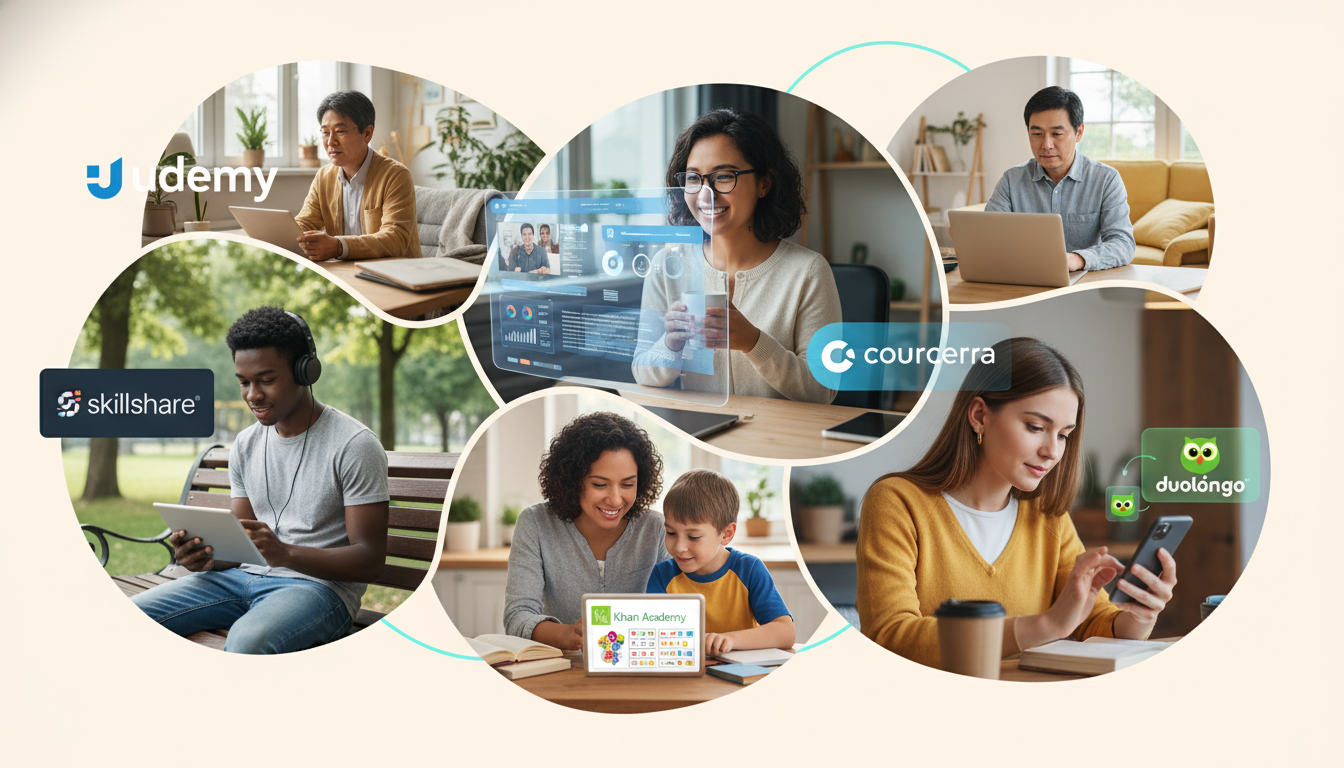
Platform Highlights for Different Learner Needs
The search for the right online learning platform often feels overwhelming—so many options, each with distinct strengths and trade-offs. Based on my experience reviewing and testing these platforms over the past several years, I’ve found that some excel in academic rigor, others in creative flexibility, and a few offer the bite-sized accessibility that fits into demanding schedules. This guide cuts through the noise with current data and practical insights to help you find your match.
Coursera – For Credentials and Career Traction
Coursera maintains its position as a leading platform through partnerships with universities like Stanford, Yale, and Imperial College London, as well as collaborations with major employers including Google, IBM, and Meta. The platform reported 168 million registered learners as of 2024, according to their official company data. I find it particularly strong for professionals seeking certifications that carry weight with hiring managers, and the platform’s AI-powered learning assistant, introduced in early 2026, helps personalize study pathways. Pricing typically runs $39–$99 per month for individual plans, with annual subscriptions around $199 for guided projects.
Benefits include recognized credentials and structured learning paths, though costs can accumulate quickly for learners pursuing multiple certifications.
Udemy – Vast, Affordable, DIY-Friendly
Udemy hosts over 200,000 courses spanning technical skills like Python programming to lifestyle topics such as photography and wellness, as documented by their company marketplace statistics. The platform’s lifetime access model appeals to self-directed learners, and I frequently recommend it for those on tight budgets given its frequent sales events where courses drop to $10–$20. However, quality varies significantly since anyone can publish, so I recommend checking review counts and instructor credentials before purchasing.
edX – Academic Depth Without the Price Tag
edX, founded by Harvard and MIT in 2012, offers university-level coursework from over 160 institutions including Oxford, Berkeley, and the Australian National University. I value their audit model, which allows free access to course materials—a significant advantage for learners testing content before committing financially. MicroMasters programs and professional credentials provide pathways to recognized qualifications. The platform acquired by Axios in 2023 continues expanding its corporate training offerings alongside traditional academic content.
LinkedIn Learning – Professional Skills Meets Profile
LinkedIn Learning differentiates itself through seamless integration with LinkedIn profiles, allowing users to display completed courses directly to their professional network. The platform offers more than 16,000 courses in business, technology, and creative fields, with completion data visible to recruiters searching the platform. For job seekers, I consider this a practical advantage—new skills appear immediately on your profile where potential employers can verify them. Individual subscriptions cost approximately $29.99/month or $299.88/year.
Khan Academy – Foundational and Free
Khan Academy remains my top recommendation for K–12 students and foundational learning. The nonprofit platform provides free access to courses aligned with Common Core standards, featuring adaptive exercises that adjust difficulty based on performance. In my testing, their personalized dashboards effectively identify knowledge gaps for targeted practice. While credentials aren’t offered, the depth of math, science, and humanities content rivals paid alternatives. The platform reports serving over 150 million registered learners globally, per their organizational data.
Skillshare – Creative, Community-Oriented Learning
Skillshare focuses on project-based creative education with classes in design, illustration, business strategy, and film production. The platform’s community model enables direct interaction between instructors and learners, which I find particularly valuable for creative disciplines where feedback accelerates improvement. Annual Premium subscriptions run approximately $167.88/year, with limited free access to select content. The platform hosts over 40,000 classes taught by practicing creatives rather than academics.
FutureLearn – Social, University-Backed Learning
FutureLearn, owned by the Open University, connects learners with courses from approximately 160 universities and cultural institutions worldwide. The platform emphasizes social learning through discussion forums and peer-reviewed assignments, reporting over 20 million learners in their company communications. I appreciate their flexible pacing options and short program certificates for learners seeking structured academic experiences without full commitment.
Thinkific, Kajabi, LearnWorlds, Podia – For Course Creators
These platforms serve educators and entrepreneurs building their own courses rather than individual learners. Thinkific provides intuitive course-building tools without transaction fees on their basic plan. Kajabi combines course delivery with marketing automation, email sequences, and landing pages for scalable digital education businesses. LearnWorlds distinguishes itself with interactive video features, built-in assessments, and SCORM compliance for corporate training requirements. Podia offers simplicity with unlimited hosting and zero transaction fees on all plans. Each serves different creator needs—my recommendation depends on whether you prioritize marketing automation, interactivity, or simplicity.
Emerging Trends and Innovations
Microlearning, AR/VR and Nanocredentials
The online learning landscape in 2026 shows clear shifts toward bite-sized, mobile-optimized content that fits into fragmented schedules. Research from the Ambient Insight report indicates the global digital learning market increasingly prioritizes microlearning modules averaging 3–7 minutes in length. The micro-credential ecosystem continues expanding, with blockchain-verified digital badges gaining employer acceptance. According to a 2024 survey by the World Economic Forum, 72% of employers reported valuing skills-based credentials over traditional degrees for applicable roles. The digital credential market is projected to grow significantly through 2032, per market research from HolonIQ.
Mergers and AI Integrations
Industry consolidation continues reshaping the platform landscape. The anticipated merger discussions between major providers could consolidate extensive course catalogs and create more comprehensive AI-powered learning pathways. I anticipate these developments will streamline user experience while potentially reducing competition-based innovation.
Corporate and K–12 Adaptations
Enterprise learning platforms like GoSkills LXP, 360Learning, and Cornerstone have evolved significantly, incorporating AI-driven personalization, peer learning communities, and compliance tracking features that appeal to HR departments. For K–12 education, Duolingo for Schools offers teacher dashboards and the Duolingo Max subscription featuring AI-powered explanations and conversation practice for language learners. These tools demonstrate how gamification and artificial intelligence address engagement challenges in formal educational settings.
How to Choose: Match Your Needs to Platform Strengths
| Learner Type | Recommended Platforms | Why It Works |
|—|—|—|
| Career-focused | Coursera, LinkedIn Learning, edX | Industry-recognized credentials, employer visibility, structured pathways |
| Budget-conscious | Udemy, Khan Academy | Frequent discounts, free foundational content, lifetime access |
| Creative/hobbyist | Skillshare, Udemy | Project-based learning, community feedback, diverse topics |
| Academic rigor | edX, Coursera, FutureLearn | University partnerships, proctored assessments, credit-eligible programs |
| Course creators | Thinkific, Kajabi, LearnWorlds, Podia | Marketing tools, platform customization, business analytics |
| K–12 learners | Khan Academy, Duolingo for Schools | Adaptive technology, standards alignment, engagement features |
| Enterprise training | 360Learning, GoSkills, Cornerstone | Compliance tracking, team analytics, collaborative features |
Conclusion
The optimal platform depends on your specific goals: credentials versus creative exploration, budget constraints versus premium features, self-paced independence versus social accountability structures. From my hands-on experience, Coursera and LinkedIn Learning provide the most employer-relevant credentials, while Udemy and Skillshare excel for flexible, affordable deep-dives into specialized topics. Khan Academy remains unmatched for foundational K–12 learning at no cost. As AI integration accelerates and industry consolidation continues, the learning options available today will only expand further.
Next step: Select one platform matching your immediate goal, complete at least one course or project, then evaluate whether your learning style aligns with the platform’s approach before expanding your educational toolkit.
FAQs
Which platform offers university-recognized certificates for career advancement?
Coursera and edX provide the most employer-recognized credentials, partnering with universities like Stanford, MIT, and University of London to offer certificates and microcredentials that appear on transcripts and can be verified by employers.
What’s the most affordable learning option for budget-conscious learners?
Khan Academy offers completely free access to comprehensive K–12 and foundational content. Udemy provides excellent value during frequent sales, with courses regularly available under $20. Combining both addresses most learning needs without subscription costs.
Where can I learn creative skills with peer feedback?
Skillshare emphasizes project-based creative education with community features enabling direct instructor and peer interaction. The platform’s class projects include critique mechanisms that I’ve found valuable for iterative improvement.
What’s effective for engaging younger learners in K–12 education?
Khan Academy’s personalized dashboards and adaptive exercises work well for structured academic learning. Duolingo for Schools offers teacher management tools alongside gamified language instruction that maintains engagement through points, streaks, and AI-powered conversation practice.
Which platforms serve corporate training needs effectively?
GoSkills LXP, 360Learning, and Cornerstone provide enterprise-focused features including compliance tracking, team performance analytics, and collaborative learning tools that I’ve seen implemented successfully in corporate onboarding and skill development programs.
Should I wait for potential platform mergers before choosing a learning platform?
Current platforms remain fully functional and worth exploring immediately. Consolidation discussions don’t indicate imminent changes that would affect existing subscribers, and building skills now positions you advantageously regardless of future industry shifts.
