

 February 7, 2026
  5 Min
5 Min  No Comment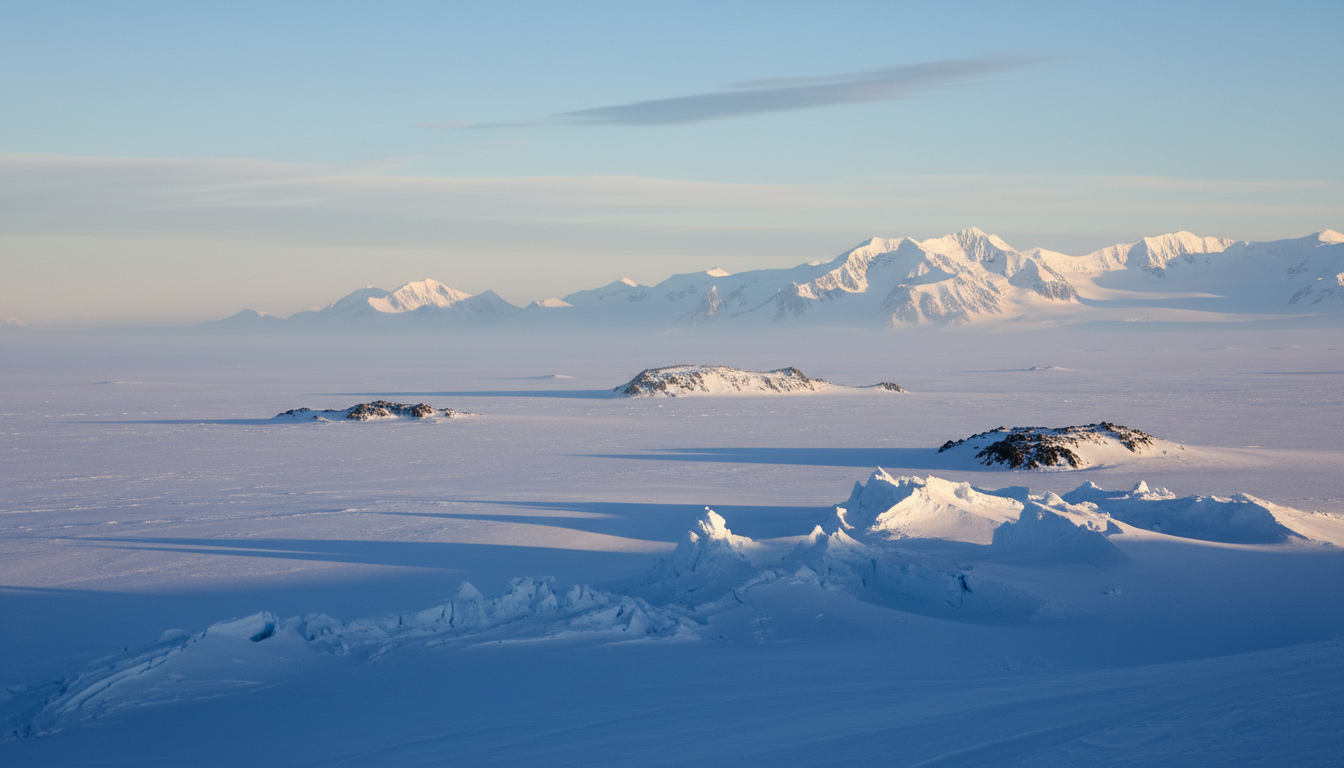
There’s something oddly captivating about deserts—they’re not just dusty wastelands but powerful landscapes of extremes, survival, and paradox. When someone casually asks, “What’s the largest desert in the world?” it’s easy to default to Sahara. But hold on—deserts are defined by dryness, not heat. This subtle nuance opens a conversation that’s less straightforward than it seems. In what follows, we’ll wander through definitions, climates, and emblematic examples—maybe even challenge your assumptions about what “desert” truly means.
Defining “Largest Desert” and Why It’s Tricky
What Makes a Desert a Desert?
At its core, a desert is simply a place that receives very little precipitation—often less than around 10 inches (25 cm) annually. So yes, icy expanses with handfuls of snow counts too, because aridity is what governs classification here.
Boundaries That Blur
Picking the “largest” isn’t just an academic exercise—geographical and climatological borders can be fuzzy. You’ve got to consider whether sea ice in Antarctica counts, or if you stick strictly to sandy terrain. Methodology matters, and that’s where debates tend to twist and zig.
The Contestants: Sahara vs. Antarctica vs. Arctic
Antarctica: The Unsuspecting Desert King
Surprising to some, Antarctica is the world’s largest desert—not Sahara. It stretches over roughly 5.4 million square miles (about 14 million square kilometers) of frozen terrain. Despite its ice cap—and not for lack of snow, but because most snow evaporates or sublimates without melting—it receives extremely little moisture annually. That qualifies it as an arid environment. It’s a reminder that deserts defy our sandy stereotypes.
The Sahara: Iconic and Vast—but Not the Biggest
Often what people imagine when they think of “desert”—sand, sun, dunes. Sahara covers around 3.5 million square miles (9 million square kilometers), which is massive, yes. But still, significantly smaller than Antarctica. It helps to differentiate between “largest hot desert” and “largest desert, period.” Sahara is indeed the former, starring in popular consciousness and tourism brochures alike.
Arctic Desert: The Quiet Runner-Up
A runner-up that’s easily overlooked—Arctic cold desert stretches across northern Canada, Greenland, and Siberia. Though smaller than Antarctica, it spans around 5 million square miles (13 million square kilometers), depending on how you count ice sheets. Even though it’s not atop the size chart, it’s a solid reminder that deserts come in cold varieties too, with ecosystems uniquely adapted to frigid emptiness.
Beyond Size: Why This Matters
Climate and Ecology Intersections
Understanding desert classifications affects ecological and climatological models. For instance, scientists studying climate change’s polar impacts must model cold desert dynamics—where moisture is scarce, even if surface ice is everywhere. It matters for predicting water availability, albedo changes, and biological conservation.
Public Perception & Education
It’s tempting for headlines to declare “Sahara is the largest desert!”—simple, click-ready, wrong. Educating the public with nuance encourages deeper literacy in geography and science. Isn’t it richer to know that the world’s biggest desert is a frozen, inhospitable expanse, invisible to many imaginations?
Expert Perspective
“We tend to visualize deserts as blazing hot sands, but the technical realities show us otherwise. The driest places on Earth are often the coldest.”
This insight, grounded in climatology, underlines the critical difference between perception and technical definition, helping us reclaim curiosity about Earth’s extremes.
Case Example: Tourism Meets Reality
Imagine a travel article promoting Sahara hot-air ballooning. It’s romantic, vivid—sand dunes stretching horizon to horizon. Yet, somewhere else, scientists are choreographing snow machines on Antarctic dry valleys, the driest places on the coldest continent. Both experiences are desert encounters, but worlds apart. The contrast highlights how the word “desert” can mean two very different things depending on context.
Conclusions and Takeaways
When someone asks “What is the largest desert in the world?” the straightforward answer hinges on definition: in sheer area, Antarctica wins by a long shot, followed by Arctic desert, and then the hot, more familiar Sahara. Recognizing this doesn’t just win trivia games—it enriches understanding of planetary patterns, ecosystems, and the kinds of extremes life endures.
Ultimately:
- Deserts are defined by aridity, not by heat.
- Antarctica is the largest desert, even if it defies typical desert imagery.
- The Sahara remains the globe’s biggest hot desert, seared deep into public imagination.
- Educating about cold deserts expands ecological awareness and scientific literacy.
FAQs
What counts as a desert—does it have to be hot?
Not necessarily. A desert is defined by how little precipitation it gets, not its temperature. Cold places like parts of Antarctica can be deserts due to extreme dryness.
Why is Antarctica considered the largest desert?
Despite its icy surface, Antarctica receives very little precipitation, making it the driest continent and thus the largest desert by area.
Is Sahara still the biggest desert?
Sahara holds the title for the largest hot desert but ranks third overall when considering all deserts, with Antarctica and the Arctic ahead.
Are there deserts in Europe or elsewhere on Earth?
Yes, small cold and semi-arid zones such as Iceland’s interior and parts of Russia qualify as deserts due to their low precipitation and specific climate patterns.
Does a desert’s size change over time?
To some degree—climate shifts, melting ice, or changes in precipitation can alter the classification boundaries, though not drastically in short periods.
That wraps up this exploration. Deserts are far more diverse than we might think, spanning from scorching dunes to silent ice expanses, each carrying its own scientific fascination.
